70 hours later, and I’m uninstalling Crimson Desert. Was the hype just a lie? 🔥
We’ve all seen the posts calling Crimson Desert the “next Skyrim.” But after grinding through the campaign, the reality is starting to set in. Beyond the photo-realistic visuals and the impressive performance, is there actually a game worth playing?
Many players are hitting a wall—confusing mission design, a narrative that feels like an “amalgamation of stuff” rather than a cohesive story, and mechanics that feel like they were ripped straight from an MMO with no regard for single-player logic. For some, the honeymoon phase is officially over, and the cracks are starting to show.
Is Crimson Desert a masterpiece of the open world, or is it just a beautiful, empty shell disguised as content?
The community is clashing, and I’m breaking down why some of us are walking away: 👇
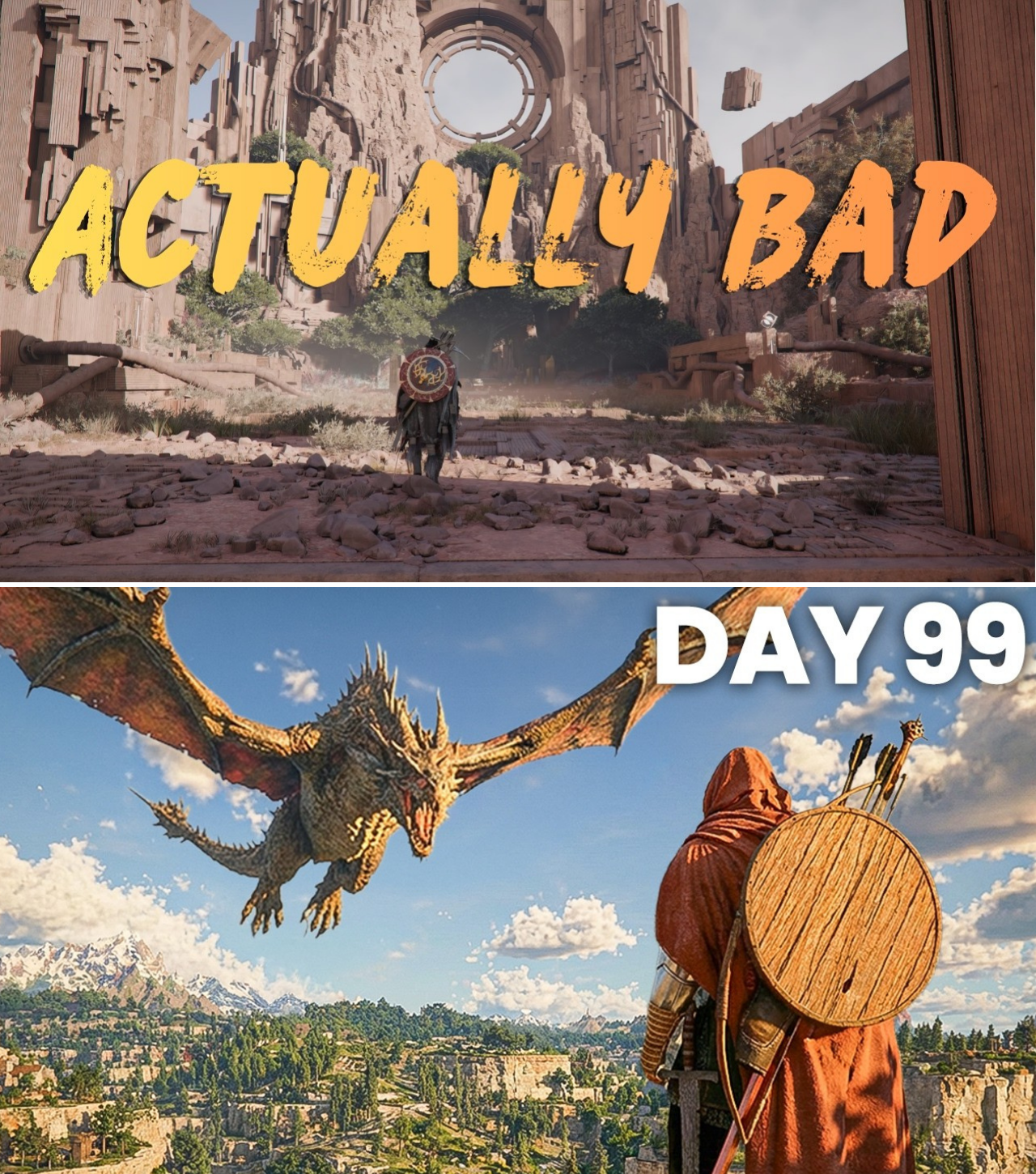
The discourse surrounding Crimson Desert has reached a boiling point. On one hand, the game is championed as a technical marvel, a sprawling, interactive playground that challenges the boundaries of the genre. On the other, a growing contingent of players are reporting a “honeymoon phase” that rapidly dissipates, leading to frustration, confusion, and eventually, total disengagement.
When Visuals Can’t Carry the Weight
For many, the initial appeal of Crimson Desert is undeniable. Its performance on modern hardware and its striking graphical fidelity serve as a compelling introduction. However, as the initial awe subsides, the core gameplay loop has become a lightning rod for criticism. The primary complaint? A lack of internal logic.
Critics argue that the game’s various systems—from base camp management to life skills—feel disparate and poorly integrated, symptomatic of a project that may have roots in a different genre entirely. The comparison to Skyrim, once used as a compliment, is now being weaponized by detractors who point to the 2011 classic’s narrative clarity as a stark contrast to Crimson Desert’s often opaque and confusing mission objectives.
The “MMO Identity” Crisis
The central point of contention is the game’s “MMO DNA.” The complex, node-based systems for base building and NPC interaction often lack the tutorialization and accessibility required for a single-player experience. Players frequently report feeling overwhelmed by systems that aren’t clearly explained, leading to instances where the game’s inherent complexity crosses the line into tedium.
This design choice highlights a fundamental divide in the community. Players who enjoy “living in” a system and mastering complex, interconnected rules find Crimson Desert to be a revolutionary achievement. Conversely, those who seek narrative coherence and intuitive, pick-up-and-play progression find the game to be a disorganized “dumpster fire” of mechanics.
The Cost of Ambition
For content creators and dedicated players, this divide has led to unexpected 180-degree pivots in opinion. Many who entered the game expecting to produce extensive, long-form content are now documenting their departure, citing a lack of mechanical satisfaction and poor communication of objectives.
The question of whether Crimson Desert was thoroughly “tested” or simply “built” is becoming a recurring theme. When the user experience is hindered by vague instructions—such as navigating obscure button inputs during key cinematic sequences—the immersion that the game works so hard to create is shattered.
A Divide in the Player Base
Crimson Desert is currently trapped between two identities. It is a masterpiece to those who view it as a sandbox to be meticulously managed, and a disappointment to those who view it as a narrative-driven RPG that should respect the player’s time.
The studio’s rapid patch cadence is a double-edged sword in this regard. While they are effectively addressing feedback, the fundamental criticisms leveled at the game’s narrative and structural design may be too deeply embedded in the game’s foundation to be easily fixed by minor patches or quality-of-life adjustments.
As the initial launch wave subsides, Crimson Desert faces a critical test. Can it retain the players who are increasingly disillusioned, or is it destined to be remembered as one of the most polarizing technical triumphs of the generation? For now, the answer depends entirely on whether a player is looking for a structured story or an infinite, complex machine.
News
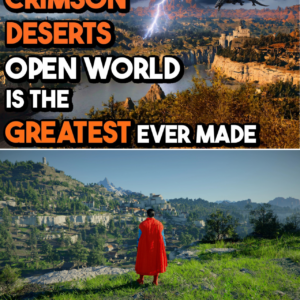
The Silent Revolution – Why Crimson Desert is Challenging the Gaming Establishment
The game legacy media is afraid to talk about… and it’s arguably the greatest open world ever made. 🌍🔥 Check the math: 93% of Crimson Desert players haven’t “finished” the game. Not because it’s too hard, but because they simply…
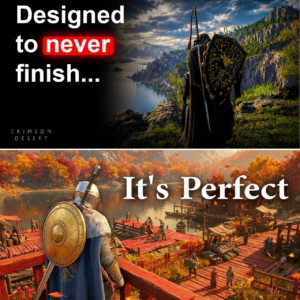
The MMO Paradox – Inside the Infinite Loop of Crimson Desert
Stop trying to “complete” Crimson Desert. You’re being played. 🔥 Ever sat down to knock out some side quests, only to realize 11 days later that you’re brewing alchemy potions, managing a livestock ranch, and chasing a legendary mount you…
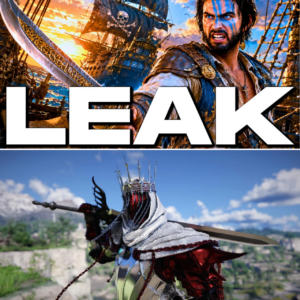
The Maritime Horizon – Is Pearl Abyss Preparing to Re-Define the Open World Genre?
CRIMSON DESERT’S FIRST DLC IS LEAKED… AND IT CHANGES EVERYTHING. ⚓️🔥 Five million copies sold. A patch schedule that puts every other AAA studio to shame. And now? The silence is finally broken. Pearl Abyss has officially confirmed in their…
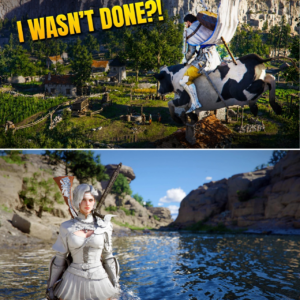
The “Living Map” Paradox – Is Crimson Desert’s Relentless Evolution a Masterstroke or a Burden?
The game that literally won’t let you quit… and it’s driving completionists absolutely insane. 🔥 Ever feel like you’ve finally “beaten” an open-world game, only to find the map you spent 200+ hours clearing has changed overnight? Most developers give…

The Gilded Age Season 4: A Dual Revolution in New York Society
The Gilded Age Season 4 is officially bringing a RECKONING. 🗽🔥 The Season 3 finale left us in absolute disbelief, but the pieces for Season 4 are falling into place, and the stakes have never been higher. We’re moving beyond…

The First Son and the Prince Return: Secret Plots, Star Power, and Everything We Know About ‘Red, White & Royal Blue 2’
The Royal Chaos is BACK! Alex and Henry’s next chapter just got VERY real. 🇬🇧🇺🇸👑 Stop trying to stay calm! The sequel to Red, White & Royal Blue is officially filming, and new behind-the-scenes leaks are dropping bombshells that change…
End of content
No more pages to load