LET THEM COOK! 👨🍳🔥 FROM “FLOP” TO 5 MILLION COPIES—THE CRIMSON DESERT COMEBACK IS LEGENDARY! 🚀🛡️
Almost no one saw this coming. One month ago, Crimson Desert launched to mixed reviews and technical chaos. Today? It’s a 5-million-copy juggernaut and a serious GOTY contender! 🤯⚔️ While other developers go silent, Pearl Abyss “locked in,” responding to Reddit rants in hours and dropping massive patches in days. This isn’t just a game anymore; it’s the new gold standard for community support! 🛡️✨
From a “bug” that became a legendary Aerial Stab skill to the addition of Five Free Mounts (War Bear and Silver Wolf, anyone?)—the developers are actually listening to how WE play! 🦅💨 Whether you’re zipping through Pywel at 170 FPS or getting lost in the “Zelda-scale” exploration, the world finally feels alive.
Is this the “GTA 6 of Medieval Fantasy”? 🏰🔥 155,000 concurrent players say YES. If you gave up on day one, it’s time to come home to Pywel. The “Pearl” has finally been polished! 💎🌊
Read the full story of the greatest turnaround in gaming history: 👇

In an industry where a “rocky launch” is often a death sentence, Pearl Abyss has achieved the impossible. Just thirty days after Crimson Desert hit shelves to a chorus of technical complaints and mixed sentiment, the game has emerged as a verified titan, moving over 5 million copies and setting a record for the fastest Korean console launch in history.
This isn’t just a story about a game being fixed; it’s a story about a developer out-pacing the internet, turning community rants into feature requests, and reclaiming the narrative through sheer operational efficiency.
The 48-Hour Pivot
The launch of Crimson Desert was, by all accounts, turbulent. Early adopters cited inconsistent frame rates, clunky inventory management, and “one-shot” bosses as primary deal-breakers. However, instead of the standard “corporate apology” followed by weeks of silence, Pearl Abyss responded with a speed that left the industry stunned.
“They were reading Reddit rants on day one and deploying fixes on day two,” noted Jackoffee, a prominent gaming historian and community commentator. “The operational efficiency required to compile that data, prioritize design decisions, and deploy tens of gigabytes in updates within the first 48 hours is unheard of for a studio this size.”
When Bugs Become Features
Perhaps the most iconic moment of the Crimson Desert redemption was the evolution of the Aerial Stab. Originally a technical glitch that players discovered to cheese movement, the community fell in love with the physics-defying move. Rather than patching it out, Pearl Abyss officially embraced it in Patch 1.03, giving it a dedicated animation and integrating it into the skill tree.
This “player-first” philosophy extended to every update. When hoarders complained about space, storage was bumped to 1,000 slots. When “dads” complained about eye strain, a font-size slider appeared. Even the lore-heavy dialogue received a pacing overhaul and a “fast-forward” toggle, proving that the developers were watching not just the big bugs, but the small frustrations that break immersion.
Pywel: A World That Challenges Giants
Beyond the technical fixes, the sheer scale of Crimson Desert’s world—Pywel—has drawn comparisons to industry titans like Red Dead Redemption 2 and The Legend of Zelda: Tears of the Kingdom. Experts, including Digital Foundry’s John Linneman, have lauded the environmental detail, citing the dynamic weather and water ripples as some of the most impressive seen in the genre.
“It’s quietly inviting you to explore,” say players who have spent over 100 hours in the starting region of Hernand alone. “You can fall through a random hole in the ground and find a massive underground mine you didn’t even know existed. It rewards curiosity over checklists.”
The “GTA 6” of Medieval Fantasy?
With Grand Theft Auto 6 looming on the horizon, the competition for “Game of the Year” 2026 is fierce. However, for fans of medieval fantasy, Crimson Desert has filled a void that many didn’t know existed. The combat—a weighty, free-form system that allows for seamless transitions between giant greatswords and dual daggers—has kept a steady concurrent player base of over 155,000.
Pearl Abyss has also expanded the value of the purchase by allowing players to replay the campaign as Damian or Anka, each with their own unique skill trees. It’s a move that effectively doubles the content and gives the single-player experience the longevity of an MMO.
Redefining Post-Launch Support
As of Patch 1.04, Crimson Desert is no longer in “damage control” mode; it is in “expansion” mode. The addition of Difficulty Settings (Easy, Normal, Hard), New Pets (including summonable birds), and Five Gameplay-Earned Legendary Mounts (the White Bear and Silver Wolf) has sent a clear message: the game is still evolving.
Future updates are already on the horizon, promising Boss Rematches and Dynamic Re-blockading Events where enemies retake territory. It is a roadmap that feels active and reactive, rather than a pre-baked DLC schedule designed to milk the player base.
Conclusion: The Pearl of 2026
The story of Crimson Desert is a reminder of why people love adventuring in games. It rewards the “wanderer” rather than the “number-cruncher,” encouraging players to find their own path through the rolling green hills and frozen tundras of Pywel.
Pearl Abyss took a “rocky launch” and polished it into a shining example of developer-player synergy. In an “abyss” of rushed releases and broken promises, Crimson Desert is the “Pearl” that proved everyone wrong. 5 million players can’t be wrong: the Greymanes are here to stay.
News
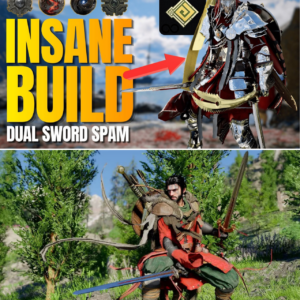
THE INFINITE PRESSURE: How the New Dual Sword Build is Melting Bosses in Crimson Desert
Is this the most BROKEN Dual Sword build ever? 😳 The “Infinite Stamina Heavy Attack” spam is literally melting bosses in seconds, and the community is calling it totally unfair! ⚔️ By stacking the Momentum and Stamina Transference Abyss Gears,…

THE RUINS GOLDMINE: Elite Excavation Routes That Are Breaking the Crimson Desert Economy
Are you still wasting your workers on low-tier missions? 🤯 The latest update made Ruins Excavations repeatable, and if you aren’t farming these specific sites, you’re missing out on exclusive Blueprints and Abyss Artifacts that make your gear god-tier! ⚔️…
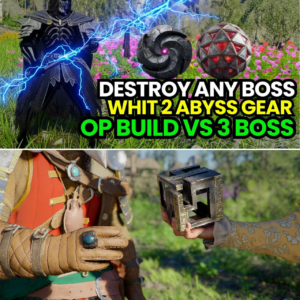
THE ATOR-SLAYER: How a “Volcano Eruption” Loop is Destroying the Crimson Desert Boss Meta
Is this the most BROKEN build in Crimson Desert history? 🤯⚔️ Elite players have just revealed a “Volcano Eruption” infinite-loop build that makes the game’s toughest bosses, including the legendary Ator, Archon of Antumbra, look like absolute pushovers! By stacking…
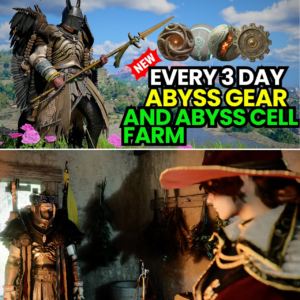
THE ERNAND GOLDMINE: Elite Community Discover New Resource Hub for Abyss Gear and Power Cores
Found the ultimate endgame honey hole! 💎 Only 1% of players know about this hidden location under Ernand that is absolutely STACKED with Abyss Gear, Abyss Cells, and rare Power Cores! 🤯⚔️ Stop wasting time on inefficient grinds. This secret…
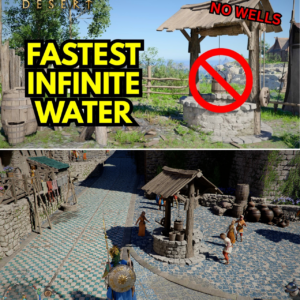
LIQUID GOLD: Exploit at Arboria Castle Gives Crimson Desert Players Infinite Water and Sparks Economy Panic
The Crimson Desert economy is literally breaking down after Patch 1.07 unexpectedly unlocked an insane infinite loot exploit that the devs are rushing to hotfix! 🚨💧 Forget paying for supplies or wasting hours at the well. Players have just discovered…
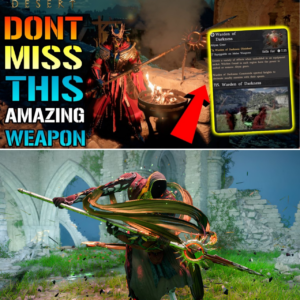
THE THORN IN PYWEL’S SIDE: Hidden Weapon Drop In Sanctum Of Revelation Ignites Fierce Chapter 5 Progression War
The Crimson Desert community is completely losing its mind over a broken Chapter 5 kiting exploit that lets you steal an S-Tier mythic weapon with zero effort—and the devs are moving fast to patch it! 🚨💔 While casuals are getting…
End of content
No more pages to load