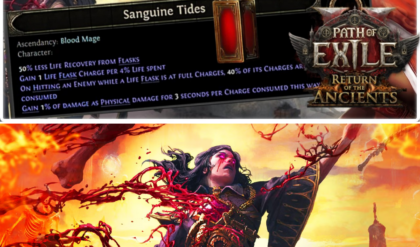
THE POE2 0.5 “NUCLEAR” PATCH IS HERE. Is your main build dead? ☢️
The developers just dropped a massive 0.5 patch, and it is a bloodbath. They’ve completely nuked some of the most iconic playstyles, including Poison Pathfinder, Infernal Legion minions, and the Energy Shield meta. If you’re still relying on old-school leech or the Oil Grenade strategy, you are in for a RUDE awakening when the new league starts!
But chaos breeds opportunity. While the losers are mourning, the winners are already prepping the new meta. We’ve identified the “big three” archetypes that emerged from the rubble stronger than ever, plus a secret synergy for Snipe Deadeye that GGG probably didn’t intend to let slip through.
Are you prepared for the shift, or are you walking into a trap? Find out who came out on top and who got obliterated: 👇🔥

The Path of Exile 2 (POE2) ecosystem has been fundamentally altered following the release of the version 0.5 “Return of the Ancients” patch notes. Spanning nearly 17 minutes of intensive analysis by top community figures, the update represents the most sweeping series of nerfs and buffs since the game’s inception. For veterans and league-starters alike, the message is clear: the era of “set-and-forget” meta builds has officially ended.
The Big Losers: A Meta Under Siege
The developers targeted specific, high-performance archetypes with surgical precision, effectively dismantling several dominant strategies.
Poison Pathfinder: In what can only be described as a “nuke,” the Pathfinder’s Overwhelming Toxicity notable had its poison duration reduction hiked from 35% to 50%. Combined with nerfs to Toxic Growth—which now caps at five pustules instead of twelve—the build’s damage and viability have been severely compromised.
Energy Shield Sustainability: If your build relied on Energy Shield as its primary defensive layer, be prepared for a struggle. The patch notes contain 64 mentions of Energy Shield, almost exclusively as nerfs. From the Mystic Stance to reduced recharge rates on small passive nodes, GGG has effectively slowed down the recovery speed, forcing players to rethink their defensive layering.
Leech Mechanics: Perhaps the most radical change involves a fundamental rework of leech. GGG has capped leech instances: only the instance with the highest recovery rate now applies. Furthermore, they introduced a 40,000-damage limit for leech calculations. For builds that relied on “instantly filling the life bar” through high-damage hits, this represents a massive survivability nerf that will necessitate a shift toward more consistent, sustained recovery.
Infernal Legion: The archetype has been gutted, with the Infernal Legion support gem seeing its damage output slashed by half (from 20% max life/second down to 10%). While the minions received a fire resistance buff to compensate, the loss in offensive output is substantial.
The Winners: New Kings of the Endgame
Conversely, certain archetypes have been bolstered, signaling a clear shift in developer intent regarding the upcoming league’s meta.
Tempest Bell Monk: In a surprising move, Tempest Bell received massive buffs. It can now be ancestrally boosted as if it were a strike skill, and the cap on active bells has been increased from one to three. Despite minor adjustments to shockwave damage, the ability to summon triple bells out of the gate is a game-changer that promises to revitalize the Monk meta.
Minion Builds (General): While Infernal Legion suffered, summoners as a whole are arguably the biggest winners. The inclusion of more minion-focused affixes on gear and the introduction of the Minion Splash support gem allow for significantly better screen-clearing speed. With a new huntress-focused minion ascendancy on the horizon, summoners are positioned to have a dominant season.
Snipe Deadeye: This build is likely to be a standout performer due to a key interaction change: the Mirage Deadeye can now cast channeled skills, including Snipe. This allows players to outsource the vulnerability of standing still while channeling to their clone, all while keeping their own damage output at the high end. It is a refinement that elevates the build from “powerful” to “potentially meta-defining.”
Twisters: Despite widespread expectations that Twisters would be hit by the nerf hammer, it remains entirely untouched. Given its status as one of the fastest campaign-speedrunning builds in the game, it is virtually guaranteed to be a top-tier choice for league starters.
Strategic Implications for League Start
For players planning their Day 1 strategy, the 0.5 patch creates a clear divergence. The “nerf-proof” nature of builds like Twisters and the offensive scaling potential of Tempest Bell Monk and Snipe Deadeye make them the most attractive options for a stable, high-performance start.
However, the broader implications are that the game is moving away from hyper-specialized, single-trick builds. With the rework to leech and the dilution of Energy Shield effectiveness, players are being steered toward hybrid defenses and more balanced gear sets.
As the community continues to digest the full scope of these changes, the consensus is that Return of the Ancients will be defined by flexibility. Those who cling to the “broken” mechanics of patch 0.4 may find themselves struggling, while those willing to experiment with the newly buffed companion nodes and mechanical synergies will find a wealth of undiscovered power.
News

The 0.5 Powerhouses: Three Builds Defining the Path of Exile 2 League Start Meta
🔥 THE META IS HERE! 3 Builds That Will CRUSH Path of Exile 2 Patch 0.5! The new patch notes are in, and while everyone is panicking about the nerfs, the real pros are already locking in their starters. Want…

The Unkillable Meta: How CoC Comet Bloodmage Defies 0.5 Nerfs in Path of Exile 2
THEY TRIED TO KILL IT, BUT IT’S BACK. 🚨 CoC Comet Bloodmage is STILL the King of POE2 0.5! The developers thought the 0.5 nerfs would finally bury the most broken build in the game. They were dead wrong. The…

The 0.5 Shake-Up: Major Nerfs and a Massive Skill Tree Expansion Rock Path of Exile 2
🚨 POE2 0.5 SHAKEDOWN: Is your build still alive? The devs just dropped a massive, stealth-patch update and everything you thought you knew about your endgame scaling is in danger. We’re talking massive nerfs to staple nodes like Subterfuge Mask…

The Minion Meta Revolution: How a New Sorceress Build is Breaking Path of Exile 2’s Scaling
STOP SCROLLING! Is this the most broken build in POE2 0.5? 😱 Forget everything you thought you knew about Minion builds being slow. We’ve just uncovered a setup that doesn’t just clear maps—it deletes bosses in literal seconds, and the…

The Art of Discovery – Why Ulzok’s Cave Rewards the “Unrushed” Player
Think you’ve cleared the map? You’re missing the secret gear hidden in Ulzok’s Cave. 🕵️♂️🔥 Exploration in Crimson Desert is all about those “Aha!” moments, but some secrets are buried so deep the community is still hunting for them. We’re…
The Gold Rush – Maximizing Wealth in the Current Crimson Desert Meta
21 Gold Bars in ONE run? Stop wasting your time with outdated gold farms. 💰🔥 If you’re still grinding low-yield trade routes, you are falling behind. We’ve discovered a “golden” method that turns your inventory into a gold mine in…
End of content
No more pages to load