WHY AAA IS DYING: How Crimson Desert Saved My Passion for Gaming! 🤯
After years of being bored by “bloated” open-world checklists like Assassin’s Creed, I thought I was done. Then came Crimson Desert. Why am I still up at 5:00 AM chasing a pirate named Sir Catfish after being told a beach was just a “good fishing spot”?
This game doesn’t hold your hand with yellow-painted paths or icons that feel like chores. It respects your time by making every minute memorable, not by streamlining the fun out of existence. It’s the closest feeling to playing Skyrim for the first time in 2011—where curiosity is your only guide and the “janky” physics just make the world feel alive. While mainstream reviewers are busy giving it a 6/10, the rest of us are busy living in the best “distraction simulator” ever made.
See why we’re all acting like “complete degenerates” again. 👇
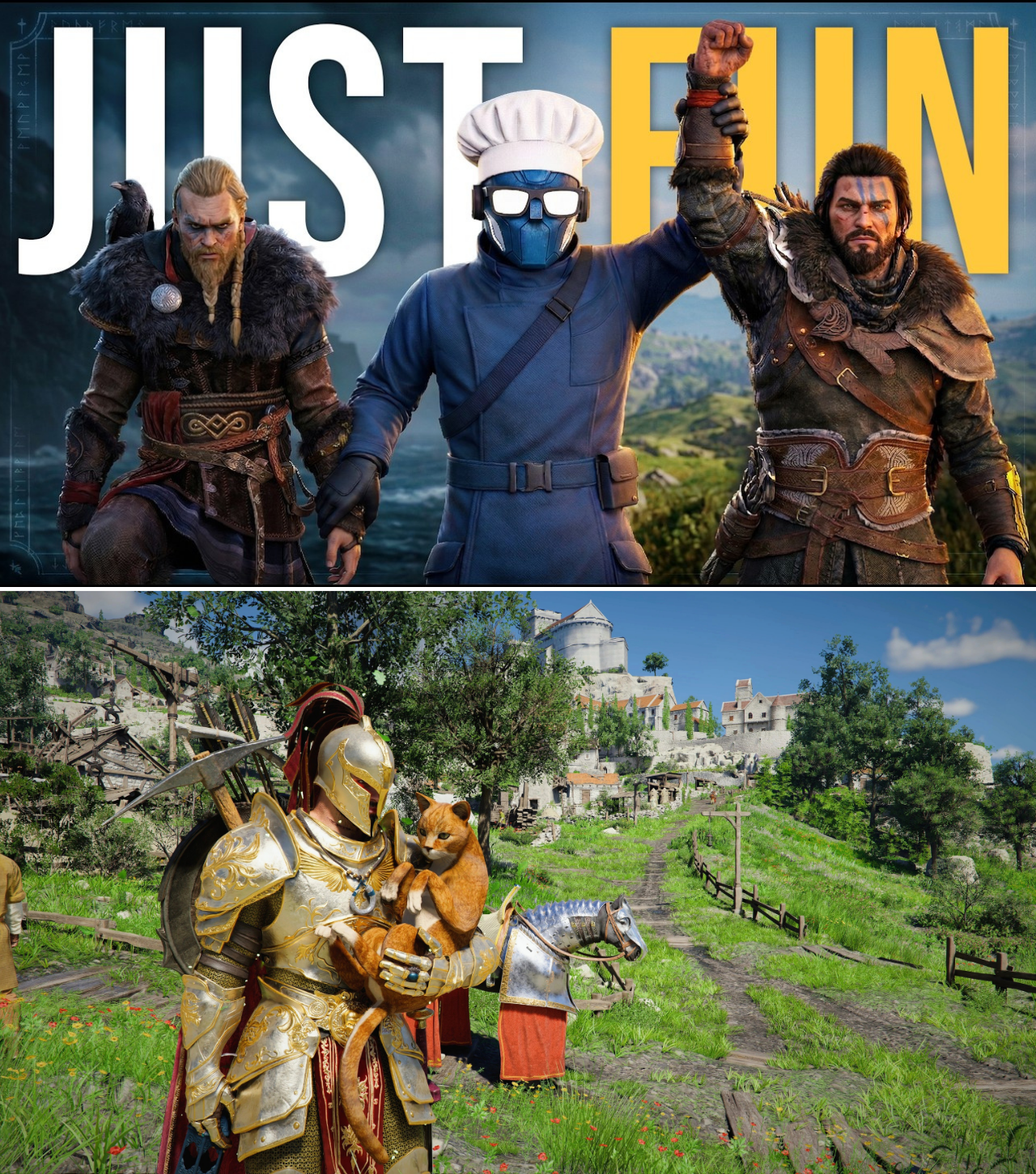
The gaming industry is currently grappling with a paradox: as open-world games become more “optimized” and “streamlined,” players are becoming increasingly fatigued. The term “genre fatigue” is often thrown around, yet the explosive success of Crimson Desert—a game that is, on paper, a massive and arguably “bloated” open-world epic—suggests that the problem isn’t the genre itself. Rather, it is a crisis of discovery.
As noted by cultural commentators like ImTheChef, Crimson Desert is achieving something that modern “legacy” franchises like Assassin’s Creed have lost: the ability to make a player feel like a kid again.
The “Sir Catfish” Incident: Organic vs. Scripted Fun
The hallmark of a failing AAA open world is the “checklist” mentality. When a player opens a map and sees hundreds of icons, the gameplay shift from “exploration” to “management.” Crimson Desert takes the opposite approach.
In one viral anecdote, a player traveled to a coastal beach simply because of a rumor about a good fishing spot. There was no quest marker, no “yellow-painted path,” and no UI prompt. Instead, they stumbled into a full-scale pirate occupation led by a villain named Sir Catfish. This led to a dramatic seaside showdown, a rowing mission through a literal minefield, and the discovery of a unique pirate hat that detects nearby loot.
This is the “Skyrim Effect”—the feeling that the world exists independently of the player and that curiosity is the only reliable guide. By the time the player realized they were three layers deep into a narrative they never planned to start, it was 5:00 AM. That sense of losing track of time is the highest compliment a game can receive in 2026.
The Respect of Friction
Modern AAA design often prioritizes “convenience” to the point of boredom. Games that hold the player’s hand the most—providing exact waypoints and simplifying travel—paradoxically respect the player’s time the least. They treat the experience as something to be “gotten through” rather than lived in.
Crimson Desert embraces friction. Its physics engine is often described as “janky” or “chaotic,” but this randomness makes the world feel alive. Whether you’re screaming at a local banker for losing your gold-bar investment or trying to get a hot air balloon back from bandits, the game trusts the player to figure it out. Much like Elden Ring or Tears of the Kingdom, the satisfaction comes from overcoming the world’s unpredictability, not from following an optimized path.
The 6/10 Divide: Reviewers vs. The Community
The disconnect between mainstream media and the player base has never been more evident. Outlets like IGN have consistently awarded 6/10 scores to titles like Crimson Desert and Where Winds Meet, often citing “clunkiness” or a lack of focus.
However, for many gamers, a “6 out of 10” in the current climate has become a badge of honor—it signals a game that hasn’t been sanded down by corporate focus groups until it’s frictionless and forgettable. Players are finding more “meaningful” experiences in the “6/10” bangers than in the “safe” 9/10 releases that feel like office-produced products.
The End of Genre Fatigue
The success of Crimson Desert proves that genre fatigue is a myth. Players aren’t tired of open worlds; they are tired of the “Ubisoft formula” that hasn’t evolved in a decade. We are no longer young; we have responsibilities and limited time. If a game starts to feel like a checklist or a second job, we bounce.
Crimson Desert gives its players a “pass” because it doesn’t try to control the experience. It offers the Hwando, the Axiom Force, and the vast continent of Pywel, and then gets out of the way. It allows for “degenerate” behavior—playing for hours for “no reason other than enjoying the change.”
Conclusion: The Call of the Abyss
Whether it’s exploring the Abyss islands in the sky—which some players “forget” for 30 hours only to return and lose themselves in puzzles—or finally getting that Kuku Flame-Resistant Armor, the game stays in the player’s head. It’s the kind of game you think about when you’re not playing.
In a world of perfectly optimized, streamlined, and forgettable AAA releases, Crimson Desert stands out as a chaotic, meaningful masterpiece. It isn’t just a game; it’s an experience that respects the player’s intelligence and rewards their curiosity. As long as there are “Sir Catfish” villains to hunt and pirate ships to clear, the people of Pywel will keep coming back—responsibilities be damned.
News
The Boss-Delete Meta: Mastering the Abyss Gear Trio for Crimson Desert’s Endgame
WANT TO DELETE BOSSES IN SECONDS? 🚨 This is the new Meta Build you need! Forget everything you know about standard builds. I’ve discovered the “Abyss Gear Trio” that essentially breaks the game’s combat system. When combined with the right…
The Wind Element Meta: Unlocking Pywel’s Most Overpowered and Underused Power
IS WIND ELEMENT THE MOST BROKEN BUILD IN CRIMSON DESERT?! 🌪️ Everyone is obsessed with Fire or Lightning builds, but Wind is secretly the most OP element in the game—and almost NO ONE is using it. I’m talking about infinite…
The Camp Resource Loop: How to Fast-Track Your Crimson Desert Base Progression
STRUGGLING TO UPGRADE YOUR CAMP? 🚨 Stop wasting hours and use THIS method instead! If you’re stuck waiting for resources to build your ranch, stables, or workshops, you’re doing it the hard way. Most players are manually farming one item…

The “Right Way” to Play: Are You Making These 5 Fatal Mistakes in Crimson Desert?
ARE YOU PLAYING CRIMSON DESERT WRONG? 🚨 Most players are grinding for hours, failing boss fights, and missing out on the best gear—all because they’re ignoring the game’s core mechanics. We aren’t just talking about “getting good” at combat; we’re…
The Golden Apple Goldmine: Faster Farming Post-Patch 1.09
GOLDEN APPLE FARM IS OFFICIALLY BROKEN IN PATCH 1.09! 🚨 Stop wasting your time running in circles—the devs just stealth-buffed Golden Apple farming, and it is glorious. After testing the new spawns, I’m seeing multiple Golden Apple Hedgehogs popping up…
Crimson Desert Major DLC Confirmed: Everything We Know About the Summer 2026 Roadmap
CRIMSON DESERT MAJOR DLC CONFIRMED! 🚨 The future of Pywel just leaked, and it’s MASSIVE. Pearl Abyss has officially dropped the roadmap from June to September 2026, and it’s not just small tweaks—it’s a total game evolution. We’re talking a…
End of content
No more pages to load