You Won’t Believe What HBO Just Did to George R.R. Martin’s Canon in the A Knight of the Seven Kingdoms Finale… 😱
After hyping up how “faithful” the show was to the books, the Season 1 ending drops a bombshell twist that straight-up rewrites a key moment from Martin’s novellas. Egg’s sneaky lie, Maekar’s panicked search, and the implications for Dunk’s whole journey? Game-changers that could ripple through Westeros history.
Fans are losing it—some call it brilliant, others say it’s heresy. Is this the bold move that fixes Game of Thrones’ mistakes… or the start of another fan war?
Full details 👇
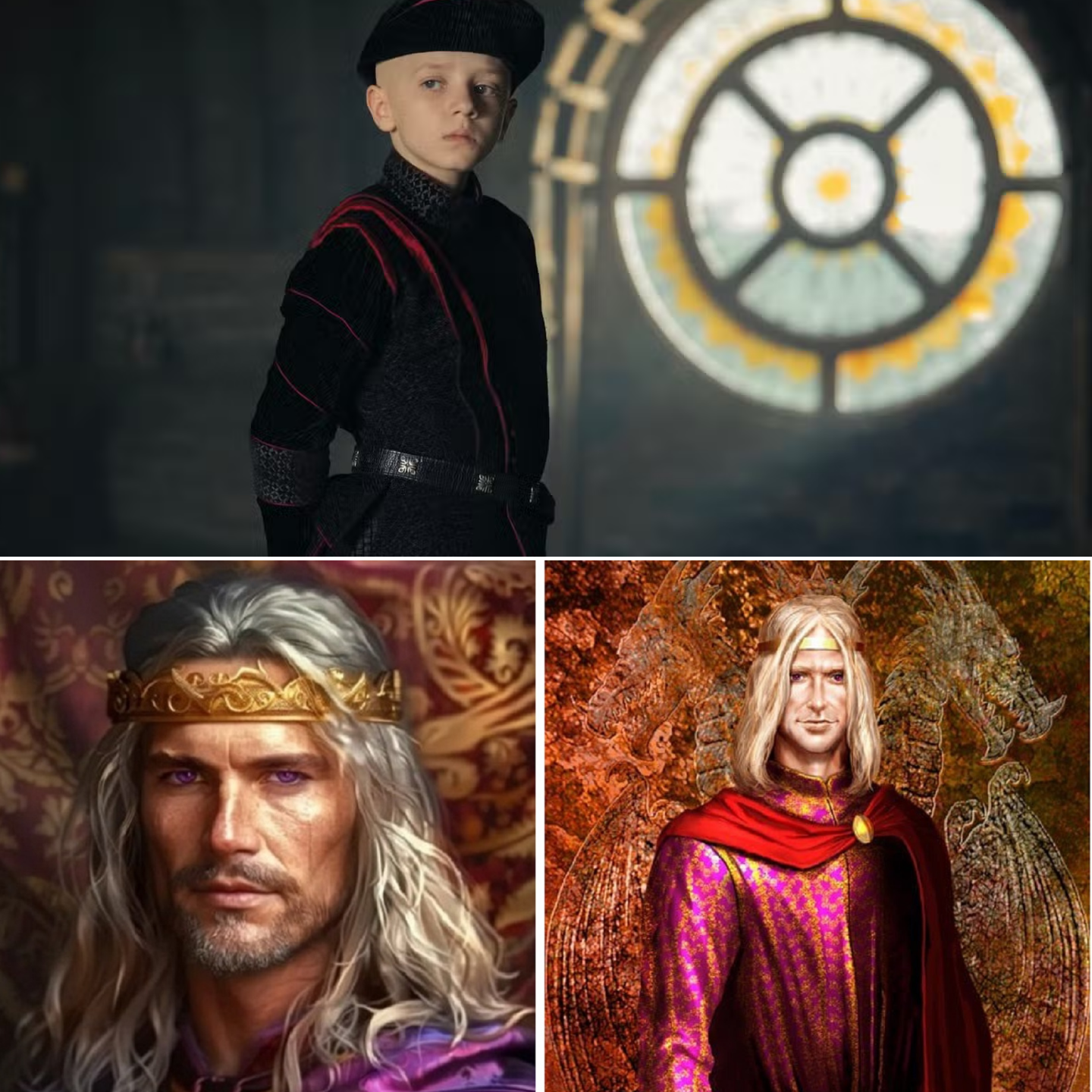
The HBO series A Knight of the Seven Kingdoms, a prequel set in the world of Game of Thrones, wrapped its first season on a note that has divided fans and prompted heated discussions about fidelity to source material. The finale, titled “The Morrow,” aired recently and introduced elements not present in George R.R. Martin’s original novella The Hedge Knight, the first in his Tales of Dunk and Egg series. While showrunner Ira Parker has emphasized the adaptation’s commitment to the core story, certain creative choices—particularly in the closing scenes—have led some to claim the show “officially rewrites” Martin’s canon.
The series, which premiered in early 2026, follows Ser Duncan the Tall (played by Peter Claffey), a humble hedge knight, and his young squire Egg (Dexter Sol Ansell), who is secretly Prince Aegon Targaryen. Set roughly a century before the events of Game of Thrones, the story centers on a tournament at Ashford Meadow, where a minor conflict escalates into a dramatic Trial of Seven. Prince Baelor “Breakspear” Targaryen dies defending Dunk’s honor, an event Martin himself has described as a pivotal “minor moment” that altered Westeros history by removing a potential strong king from the line of succession.
The bulk of Season 1 stays close to The Hedge Knight‘s plot, expanding on character backstories and relationships to fill the runtime of six roughly 30-minute episodes. Additions include deeper flashbacks to Dunk’s childhood in Flea Bottom and more screen time for supporting figures like Ser Lyonel Baratheon. These changes have generally been well-received, with critics and fans noting that they enhance themes of honor, knighthood, and social class without altering the novella’s heart.
However, the finale introduces a notable divergence in its final moments. In Martin’s book, Egg’s decision to leave with Dunk after the trial is left somewhat ambiguous regarding whether Prince Maekar Targaryen, Egg’s father, explicitly grants permission. The novella implies the young prince simply runs away, consistent with his rebellious nature—he had already disguised himself and fled the royal party earlier.
The show takes a clearer stance: Egg tells Dunk that his father has approved the arrangement, and the pair ride off together. But the episode’s very last scene undercuts this claim. As the Targaryen court departs Ashford, Maekar is shown urgently searching for his missing son, his expression one of alarm and confusion. This visual explicitly confirms that Egg lied to Dunk, departing without Maekar’s knowledge or consent.
Showrunner Ira Parker addressed the change in interviews following the finale. He told outlets like Entertainment Weekly and Collider that the scene was a deliberate addition to heighten drama and set up future conflicts. “It will be addressed,” Parker said of Egg’s lie, noting it aligns with the character’s tendency to bend the truth for his own ends. Parker emphasized that he pitched the ending to Martin, who co-created the series, and received approval. The alteration, he argued, adds tension without contradicting the established path of the stories.
Critics of the change point out that it shifts the dynamic in a way that could affect how events unfold in The Sworn Sword, the second novella, which Season 2 is set to adapt. In the books, Maekar’s lack of immediate awareness allows Dunk and Egg to travel freely for a time before consequences catch up. By making Maekar’s ignorance explicit and immediate, the show potentially amplifies future repercussions—perhaps prompting a royal pursuit or altering family dynamics.
Defenders of the adaptation argue that such tweaks are necessary and beneficial. The novellas are concise—The Hedge Knight is around 100 pages—requiring expansion for television. Previous Game of Thrones spin-offs like House of the Dragon have faced backlash for larger deviations, but A Knight of the Seven Kingdoms has largely avoided that fate by keeping changes character-focused rather than plot-overhauling. The ambiguity around Dunk’s own knighthood—whether Ser Arlan truly knighted him before dying—remains intact, per Parker’s comments that Martin wanted it left open-ended for viewers to decide.
In one finale flashback, Dunk confronts the ghost of Ser Arlan about the knighting, with the scene cutting away ambiguously. Parker confirmed this preserves the mystery central to Dunk’s arc: what truly defines a knight— a title or actions? This element reinforces the show’s themes without “rewriting” core canon.
The finale also teases broader implications. Maekar’s panic could foreshadow tensions within House Targaryen, already fractured by Baelor’s death. In Martin’s lore, these events contribute to the eventual Blackfyre Rebellions and Aegon V’s (Egg’s) rise to the throne as a reformer king. How the show handles Egg’s lie in Season 2, expected in 2027, will likely determine whether fans view it as a smart evolution or an unnecessary complication.
HBO renewed the series for Season 2 before the premiere, signaling confidence. Production on the next installment, adapting The Sworn Sword, was underway by early 2026. The novella introduces new characters like Lady Rohanne Webber, the “Red Widow,” and a land dispute in the Reach amid drought. Parker has promised to remain “pretty faithful” while adding “little flourishes,” much like Season 1.
Martin has shared outlines for up to 12 additional Dunk and Egg tales beyond the three published novellas, though he prioritizes The Winds of Winter. If the series continues, it could explore Dunk’s eventual role as Lord Commander of the Kingsguard and Egg’s reign.
For now, the finale’s twist has reignited interest in Martin’s source material. Sales of A Knight of the Seven Kingdoms omnibus edition have surged, and online forums buzz with debates over canon purity versus adaptation necessities.
Whether this counts as a true “rewrite” remains subjective. The core events—Baelor’s death, Dunk’s exoneration, and the duo’s ongoing journey—stay true. The added scene heightens stakes in a grounded, character-driven story that contrasts with the spectacle of earlier Game of Thrones entries.
As Parker put it, the goal is to follow Martin’s road while making the journey compelling for television. With Season 2 on the horizon, fans will soon see if Egg’s deception pays off—or catches up in dramatic fashion.
News
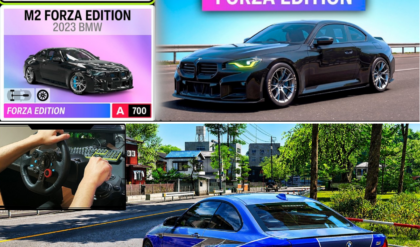
The Hunt for Excellence: How to Secure the BMW M2 Forza Edition in Forza Horizon 6
THE BMW M2 FORZA EDITION IS HERE—BUT HOW DO YOU ACTUALLY GET IT? 🏎️🔥 Everyone wants the BMW M2 Forza Edition. It’s the ultimate grip machine, and for a good reason—it’s currently one of the most exclusive cars in Forza…
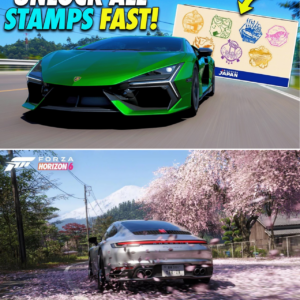
The Gold Standard: How to Rapidly Progress Through the “Discover Japan” Series
WANT THE GOLD STAMP? STOP GRINDING RACES AND DO THIS INSTEAD! 🏆🇯🇵 Are you still stuck on the “Pink” or “Orange” Stamp tier in Forza Horizon 6? You’re playing it wrong. The road to the Gold Stamp isn’t just about…
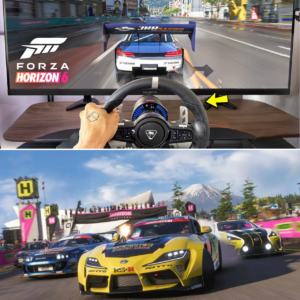
The Wheel Revolution: Why Forza Horizon 6 is Finally a Sim-Racer’s Playground
IS THE “WHEEL CURSE” FINALLY BROKEN IN FORZA HORIZON 6? 🏎️🎮 For years, Forza was a “controller-only” game. Using a wheel felt like fighting a losing battle against the physics engine—but everything changed with the launch of Forza Horizon 6….
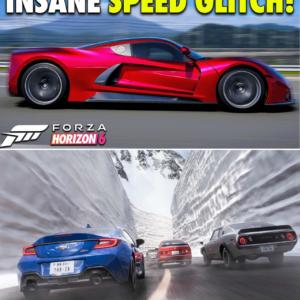
Speed Demon or System Cheat? The Forza Horizon 6 Leaderboard Controversy
IS THIS THE END OF FAIR PLAY? THE 100,000 KM/H SPEED GLITCH! 🛑🏎️ If you’ve checked the Forza Horizon 6 leaderboards recently, you’ve probably seen the impossible: players hitting speeds of over 100,000 km/h on simple speed traps. No, it’s…
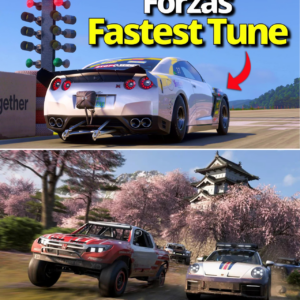
Beyond the Limit: Mastering Top Speed and Drag Tunes in Forza Horizon 6
IS YOUR CAR HITTING THE “SPEED WALL”? 🚀💨 Stop guessing your gear ratios and tire pressure! If you’re still losing drag races by a bumper or struggling to break 300 MPH on the highway, it’s not just your car—it’s your…
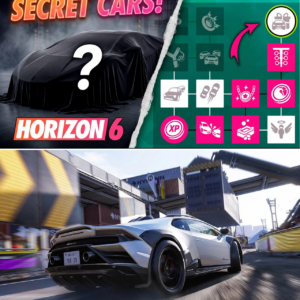
The Secret Garage: Unlocking Forza Horizon 6’s Hidden Mastery Exclusives
STOP SLEEPING ON YOUR CAR MASTERY TREES! 😱🚗 Did you know there are “secret” cars hidden inside Forza Horizon 6 that you can’t buy at the Auto Show? Most players are burning through Skill Points on boring credit boosts, completely…
End of content
No more pages to load