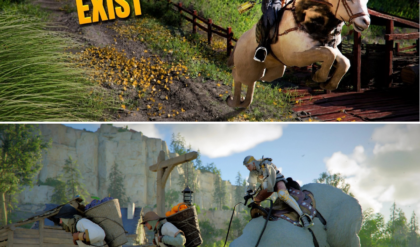
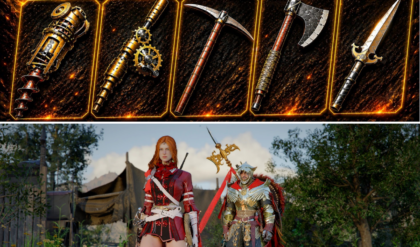
Gamers are racking up 200+ hours in Crimson Desert and are coming to a shocking realization: they still have absolutely no idea what genre this game actually belongs to. Pearl Abyss has quietly created a massive mechanical anomaly that completely breaks every standard rule of modern AAA game design.
While mainstream publishers spend millions polishing single-sentence elevator pitches, Crimson Desert does something completely unthinkable by stuffing high-budget blockbusters with chaotic, unhinged features that standard studios would have axed in the board meeting phase. The deeper you go, the more the standard “action-adventure” label crumbles under the weight of systems you didn’t even know existed—leaving the community completely divided between absolute obsession and total exhaustion.
See why the game’s lack of identity is its most toxic, addictive feature, and the hidden MMO mechanics driving the chaos 👇
In the modern video game industry, major AAA projects are strictly defined by their marketing elevator pitches. Whether a title markets itself as a cinematic linear narrative, an open-world checklist, or a brutally punishing Soulslike, players typically know exactly what loop they are purchasing before even executing a download. Yet, months after its highly successful launch, Pearl Abyss’ Crimson Desert is presenting a fascinating psychological phenomenon: players are sinking hundreds of hours into the vast continent of Pywel and openly admitting they still cannot define what kind of game it actually is.
On the surface, Crimson Desert is labeled as an open-world action-adventure title. But as community analytical deep-dives and veteran player testimonials from creator networks like RadxRoamer surface, that mainstream label is increasingly being viewed as a deceptive oversimplification. Rather than conforming to standard genre constraints, the game functions as a sprawling, unpredictable pile of interlocking mechanics that defies traditional classification.
The Antithesis of the Clean AAA Pitch
To understand the community’s collective confusion, one must look at the standard design philosophy governing competing blockbusters like The Witcher 3 or Red Dead Redemption 2. In those titles, every mechanic is strictly vetted through extensive corporate focus groups to ensure it directly supports the central pitch. Excess features that muddy the onboarding process or alienate casual consumers are systematically cut during production.
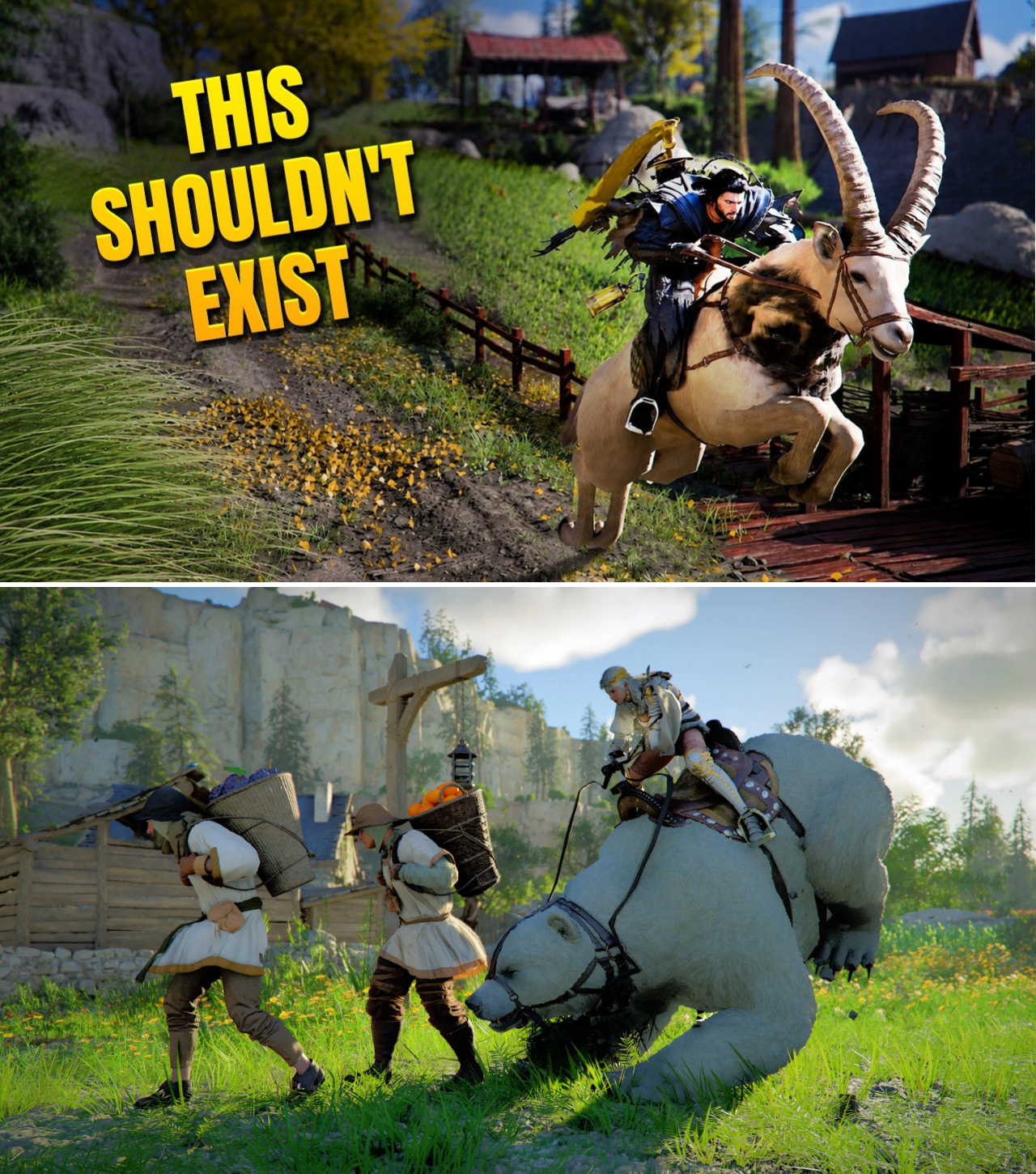
Crimson Desert operates under the exact opposite philosophy. The game routinely forces players into wildly divergent loops, transitioning from high-octane melee combat to granular settlement management, survival-lite temperature systems, mass military warfare, domestic animal breeding, and niche life-simulation mini-games.
“Every time I think I’ve got it figured out, it throws another seemingly random mechanic into the mix,” observed community commentator RadxRoamer. “The developers at Pearl Abyss kept finding new systems to add, and somehow nobody stepped in the room to say it was too much. It doesn’t feel like a game designed around one clean pitch.”
This design bloat has created a highly polarized environment. For a significant portion of the player base, the constant discovery of hidden sub-systems—such as stumbling into an entirely undocumented physics mechanic 40 hours into a playthrough—provokes a level of raw curiosity that modern gaming rarely accommodates. For others, the lack of mechanical restraint results in absolute sensory and cognitive exhaustion.
Tracing the MMO Genetic Code
Industry analysts point out that Crimson Desert’s stubborn refusal to conform to a single single-player template is a direct consequence of Pearl Abyss’ corporate heritage. As the creators of the massive MMORPG Black Desert Online, the South Korean development studio is fundamentally conditioned to build virtual environments meant to be lived in over years, rather than consumed over a single weekend.
This genetic code manifests in how Pywel treats density. The game client frequently minimizes the importance of its primary narrative thread involving Kliff to prioritize overworld curiosity. It is highly common for a player to complete a major story arc and feel zero compulsion to pursue the next cinematic beat; instead, they are drawn toward a bizarre architectural anomaly on the horizon or an obtuse crafting loop they had spent the last 20 hours completely ignoring.
The studio seemingly constructed a massive, photorealistic world first, and then systematically stuffed it with every mechanical idea, physical interaction, and ambient sub-system the engine could structurally tolerate. The onboarding process is notoriously thin, offering virtually zero tutorial guidance for high-tier features, assuming instead that the player will naturally learn the parameters through community osmosis or sheer trial and error.
The Production Value of a Cult Classic
Historically, games possessing this level of structural instability and eccentric design priorities are relegated to low-budget, niche “cult classic” status. Titles with overambitious, unpolished features are usually forged by scrappy independent studios swinging above their weight class.
The paradox of Crimson Desert lies in its staggering production budget. Pearl Abyss has wrapped the eccentric, kitchen-sink design philosophy of a cult game inside the immaculate presentation of a multi-million-dollar blockbuster. The hyper-detailed urban geometry of cities like Hernand, the fluid physical weight of its traversal mechanics, and the sheer scale of its real-time combat systems demand the respect of a prestige industry heavyweight.
This juxtaposition creates a unique psychological hook: the budget gives the strangest, most unnecessary ideas absolute room to breathe. Walking through a crowded marketplace isn’t just a visual experience; it is an interaction with a dozen overlapping simulation layers that don’t technically need to exist to tell a story, but collectively make the world feel uniquely alive and volatile.
The Trade-Off: Brilliance vs. Friction
Despite the overwhelming obsession driving the game’s core fanbase, community forums are quick to note that Crimson Desert’s multi-genre identity comes with significant technical and structural trade-offs:
The Onboarding Deficit: The game is routinely criticized for failing to explain its own intricacies, introducing high-stakes survival mechanics right before completely forgetting to provide a tutorial for them.
Camera and UI Volatility: With so many physics systems and combat styles fighting for real-time memory allocation, the tracking camera frequently experiences erratic behavior during tight indoor skirmishes.
Uneven Narrative Pacing: Because the overworld actively actively rewards players for abandoning quests to pursue random life-simulation tasks, the emotional momentum of the primary storyline is frequently shattered.
Yet, even as players criticize the clunky tutorials or the thin plot progression, the overarching consensus remains remarkably positive. In an era where AAA gaming is often chided for feeling heavily corporatized, homogenized, and predictable, Crimson Desert’s messy, over-engineered ambition stands out as a monument to pure developer personality. It is an uneven, chaotic, and brilliant experiment that proves that sometimes, not knowing what a game is even after 200 hours is the ultimate reason to keep playing.
News
THE PYWEL OVERHAUL: Pearl Abyss Outlines Unprecedented Summer Roadmap to Reword Core Narrative and Character Mechanics in Crimson Desert
Pearl Abyss just dropped a massive summer roadmap that confirms Crimson Desert is about to become a completely unrecognizable game over the next six months. In an unprecedented move that has completely stunned the industry, developers are officially rewriting the…
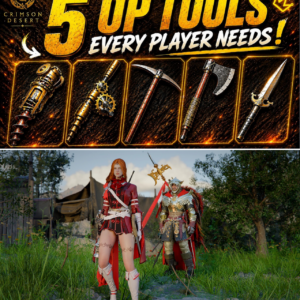
BEYOND THE META: Why These 5 Crimson Desert Tools Are Wave-Modifying Endgame Progression Over High-Tier Gear
Stop grinding generic endgame gear sets. High-level Crimson Desert players have just realized that five completely overlooked open-world utility tools are quietly breaking the entire progression meta. If you’re heading into high-tier regions without these specialized items equipped, you are…

FELLBEAST AWAKENS: Crimson Desert Players Discover Lord of the Rings-Style Wyvern That Bypasses City Flight Bans
Hardcore MMO fans are ditching the legendary Black Star Dragon for a newly discovered, terrifyingly gothic mount that looks straight out of The Lord of the Rings. This beast completely shatters the game’s strict exploration laws—allowing you to bypass forced-dismount…

THE 5TH WYVERN EGG: Crimson Desert Discovery Sparks Massive 5-Elemental Dragon Theory Among Players
The entire Crimson Desert community is losing its mind after lore hunters discovered a hidden 5th Wyvern Egg that completely shatters the game’s current endgame meta. Everyone thought there were only four mythical mounts tied to the main map, but…

CRIMSON DESERT UPDATE 1.10: Devs Quietly Remove No-Fly Zones, Introduce Secret Mounts and Casino Mini-Games
Pearl Abyss just dropped Update 1.10 for Crimson Desert, and it quietly removed one of the most hated exploration restrictions in the entire game. Players are suddenly bypassing major geographic barriers on their massive flying mounts, pulling off insane maneuvers…
SILENT SAVE WIPE: Pearl Abyss Warning Ignored as Game-Breaking Cloud Bug Devastates Crimson Desert Players
Imagine losing 100+ hours of elite gear, rare boss drops, and your ultimate character progression in less than 30 seconds. A devastating cloud-sync exploit is quietly wiping out player accounts across PC and consoles, and the developer’s official response is…
End of content
No more pages to load