THE WITCHER 3 DIRECTOR JUST ENDED THE CRIMSON DESERT HATE! 🤯⚔️ “A MASTERPIECE OF FRESH IDEAS!” 🔥🛡️
The gaming media wanted you to believe it was “shallow,” “copy-paste,” and “AI-generated slop.” But the GOAT himself, Conrad Tomaszkiewicz, just stepped in and destroyed every single argument! 📉🚫 In a shocking new interview, the man behind The Witcher 3 praised Crimson Desert for doing what Western AAA studios are too afraid to do: TAKE RISKS! 🚀✨
While journalists are busy “counting horse legs” in AI paintings, 5 MILLION players are busy flying dragons and exploring a world deeper than any puddle! 🐉🏰 With a staggering 800,000 concurrent players on Steam a month after launch, Crimson Desert isn’t just a “comeback”—it’s a revolution against the corporatized, live-service “slop” we’ve been fed for years. 🛡️💨
Is this the “Anti-Ubisoft” hero we’ve been waiting for? Even the director of the upcoming Blood of Dawnwalker says YES. It’s time to stop listening to the salt and start listening to the legends! 🦅🔥
The truth behind the “AI Scandal” and the 5-million-copy victory lap here: 👇
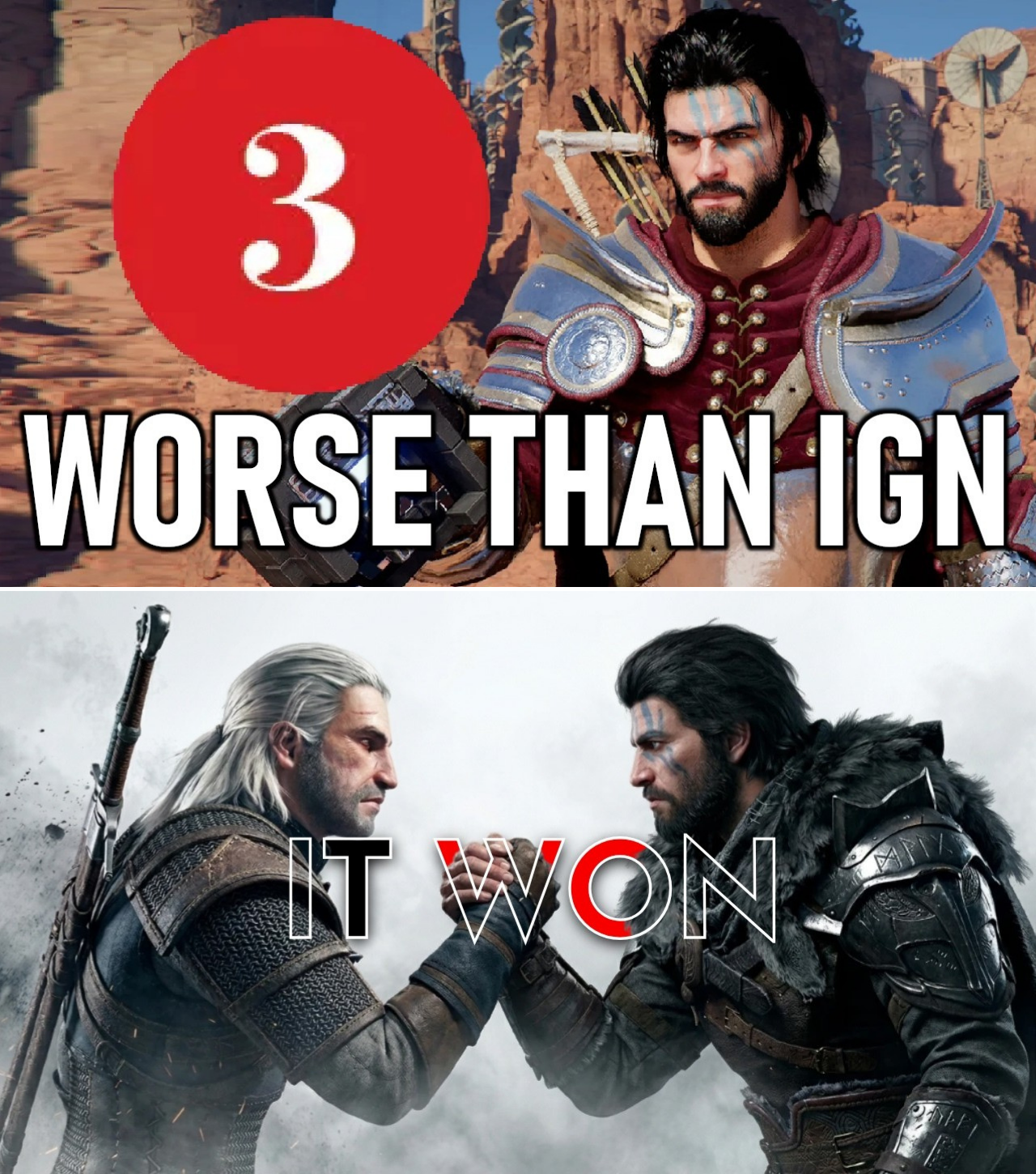
In the month since its release, Crimson Desert has been the target of a relentless, multi-pronged attack from Western gaming media outlets. Critics have labeled it a “cynical amalgamation” of mechanics and a “shallow puddle” of an open world. However, the narrative shifted dramatically this week when Conrad Tomaszkiewicz, the acclaimed Director of The Witcher 3: Wild Hunt, threw his full weight behind the game, effectively ending the debate on its artistic and technical merit.
In an era defined by the failure of $300 million live-service “slops” and extraction-shooter fatigue, Tomaszkiewicz’s praise for Pearl Abyss isn’t just a compliment—it’s a condemnation of the current state of Western game development.
Destroying the “Copy-Paste” Narrative
The primary criticism leveled against Crimson Desert by outlets like PC Gamer and GameSpot has been its supposed lack of identity. They argued that the game’s constant patches (v1.01 through v1.04) and varied mechanics were evidence of a “design-by-committee” approach.
Tomaszkiewicz disagreed. In an interview with The Game Business, he compared his experience with Crimson Desert to the “golden age” of 90s gaming on the Atari and 286 PCs. “Those games were different,” he stated. “They weren’t a copy of other free-to-play games; they delivered something fresh. I’m really glad of it because I’m starting to feel like I did when every game was an unknown adventure.”
This endorsement has struck a chord with the community, especially as Crimson Desert continues to pull in 800,000 concurrent players on Steam—a retention rate that dwarfs recent high-budget Western releases like Resident Evil: Requiem.
The AI “Scandal” and the Media Schism
The media’s latest attempt to derail the game’s success focused on an “AI Scandal” involving background assets and paintings in player housing. While outlets claimed this should “bother players more,” the community’s reaction was one of indifference.
“While journalists are staring at paintings counting horse legs, players are out there flying dragons and mastering the Azuna Drop,” noted a viral community post. Pearl Abyss’s swift response—replacing the controversial assets within days—further highlighted the operational efficiency that Western studios often lack.
Small Teams, Big Risks: The Rebel Wolves Philosophy
Tomaszkiewicz’s defense of Crimson Desert is deeply tied to his own departure from CD Projekt Red to form Rebel Wolves. He criticized the bloated management structures of modern AAA studios, noting that Cyberpunk 2077 had 125 people in management alone—nearly the size of his entire current development team (140 people).
“You cannot create art with a ‘monetization-first’ mentality,” Tomaszkiewicz argued. He praised Crimson Desert for its “risky” approach to immersion and emotion, contrasting it with the “safe, generic garbage” being pumped out by legacy publishers who are currently facing mass layoffs and dwindling player counts.
Redefining the “Hero Fantasy”
The article also touches on the success of other Eastern titles like Pragmata and Windrose, which have tapped into a specific “player fantasy” that Western devs have largely abandoned. Whether it’s the fantasy of being a protective parent in Pragmata or the rugged mercenary leader in Crimson Desert, these games are resonating with a male-dominant gaming space by providing a sense of agency and “healthy creative friction.”
A New Benchmark for RPGs
As Tomaszkiewicz prepares his next project, The Blood of Dawnwalker, he has cited Crimson Desert as a peer in innovation. Both games reject microtransactions and pre-order bonuses in favor of a cohesive, exploration-driven experience.
The success of Crimson Desert—5 million copies sold in 27 days without the safety net of a legacy publisher—is being viewed as a “vibe shift” in the industry. It proves that the “Witcher standard” of deep, single-player storytelling is not dead; it has simply moved East.
Conclusion: The Redemption of the Greymanes
Conrad Tomaszkiewicz’s intervention has fundamentally changed the conversation. The “disappointed gamers” of the world have found their vindication. Crimson Desert isn’t just a fixed game; it is a signal to the rest of the industry that players are hungry for risk, for art, and for a developer who locks in and listens.
As the critics retreat and the player counts hold steady, the legacy of Kliff and the Greymanes is secure. The Witcher has spoken, and the debate is over. Pywel is the new standard.
News
THE UNSPOKEN UPDATE: Phoenixes, Hidden Cloth, and the End of the Pywel Storage Crisis
BEYOND THE PATCH NOTES! 📜🕊️ THE LEGENDARY PHOENIX & HIDDEN GREYMANE ARMOR REVEALED! Did you think Patch 1.04 was just about bug fixes? Think again! Pearl Abyss just snuck in some of the coolest content yet, and if you aren’t…

THE SOLDIER’S SACRIFICE: How Patch 1.04 Reworked the XP Meta and the New King of Abyss Artifacts
ICE WALKERS ARE PATCHED! 🛑⚔️ THE NEW “GOD-TIER” XP FARM FOR 1.04 IS HERE! 🤯🚀 Did Pearl Abyss just kill your progression? Think again! While they officially nuked the Ice Walker artifact farm, we’ve found the new king of XP…

THE IMPOSSIBLE COMEBACK: How Pearl Abyss Turned a Rocky Launch Into a 5-Million-Copy Masterpiece
LET THEM COOK! 👨🍳🔥 FROM “FLOP” TO 5 MILLION COPIES—THE CRIMSON DESERT COMEBACK IS LEGENDARY! 🚀🛡️ Almost no one saw this coming. One month ago, Crimson Desert launched to mixed reviews and technical chaos. Today? It’s a 5-million-copy juggernaut and…

THE HEDGEHOG HEIST: How Patch 1.04 Accidentally Created Pywel’s Most Lucrative “Legal” Gold Farm
STOP THE GRIND! THE “GOLDEN APPLE” BUFF JUST MADE MILLIONS EASY IN CRIMSON DESERT! 🍎💰 Did Pearl Abyss just break their own economy? While they were busy patching “unlimited” steals, they secretly made Golden Apple Hedgehog farming the easiest way…

STRIKING FROM THE SHADOWS: The Discovery of the Lightning Bolt Plate Gloves and the Shift Toward “Agile-Tank” Meta
UNLOCKED: THE “GOD OF THUNDER” SPEED BUILD! ⚡️🧤 GET THE LIGHTNING BOLT PLATE GLOVES NOW! Are you still feeling sluggish in combat? It’s time to ditch your heavy gear and grab the most “electrifying” upgrade in Pywel! 💥 The Lightning…

THE GREAT RECESSION OF PYWEL: Analyzing the Economic Aftershocks of Crimson Desert Patch 1.04
PATCH 1.04 IS KILLING THE PYWEL ECONOMY! 😱💸 GOLD BAR FARMING: PATCHED OR NERFED? THE TRUTH REVEALED! The rumors are true: Pearl Abyss is officially cracking down on our favorite farming spots! 📉⚔️ Patch 1.04 just went live, and it…
End of content
No more pages to load