How Austin & Columbus Biotech Scaleups Are Rewriting Supply Chains
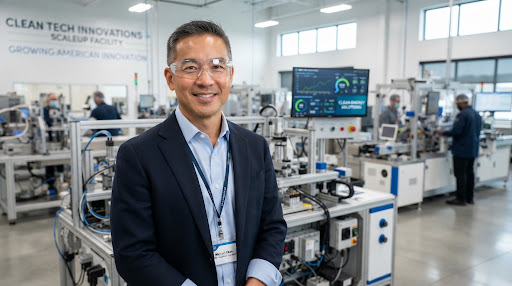
In this illustrative scenario, two young companies in Austin and Columbus say modular fermentation reactors can turn Midwest corn sugar into biodegradable packaging resins at industrial scale.
Key takeaways
- check_circleTwo unnamed scaleups say modular reactors can ferment domestic corn sugar into biodegradable packaging resins.
- check_circleCustomer pilots are under way, but company-reported scale and cost claims have not been independently verified.
- check_circleCost versus petroleum plastics and limited composting infrastructure remain the biggest open questions.
In this illustrative launch-edition report, we look at a quiet experiment in American supply chains: using microbes and corn sugar to make the plastic that wraps products. The two scaleups at the center of this story, one in Austin and one in Columbus, are unnamed, and their claims are company-reported.
Both companies say modular fermentation reactors can convert domestic corn sugar into biodegradable packaging resins, and that they can do so at industrial scale. If true, it would link a Midwest farm commodity directly to a manufacturing input that is usually derived from oil and gas.
How the process works
Fermentation is an old idea applied with new precision. Brewers use yeast to turn sugar into alcohol; here, engineered or carefully selected microbes turn sugar into a different product, a polymer building block. The sugar comes from corn, which is milled and processed into a clean sugar stream that feeds the reactors.
Two families of bioplastics are most often discussed. PLA, or polylactic acid, starts with microbes producing lactic acid, which is then chemically linked into a plastic. PHA, or polyhydroxyalkanoates, are polymers that certain microbes can make directly inside their cells, which are later harvested and purified. The companies in this scenario have not detailed which route each one uses, and the differences matter: PLA tends to need industrial composting to break down, while some PHAs are known to degrade in a wider range of environments.
Why modular reactors
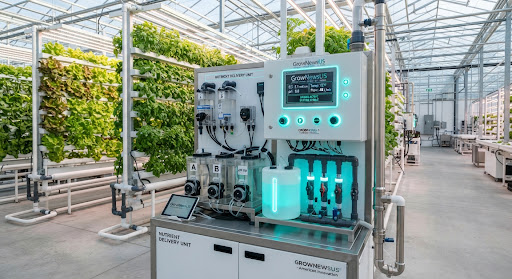
Traditional chemical plants are built big and built once. Modular reactors take a different approach, using standardized units that can be added or moved as demand grows. For a young company, that reduces the up-front bet: instead of financing a giant plant before proving the market, it can add capacity unit by unit.
- Lower initial capital than a single large facility.
- Flexibility to site near feedstock, such as a corn-processing region.
- Faster iteration as engineers improve one unit and replicate the design.
- A reduced risk of stranded assets if demand for a particular resin grade shifts.
The trade-off is that many small units can cost more per ton than one very large plant, so the economics depend on how well the modules are standardized and how consistently they run.
Rewriting the supply chain
The supply chain argument is straightforward. Conventional packaging resins often depend on petrochemical feedstocks and on long shipping routes. A corn-based resin made in Ohio or Texas shortens that chain and ties raw material to a crop the region already grows. For farmers and grain processors, it also suggests a new outlet for corn sugar beyond food and fuel.
“Our customers keep asking one question: can you give us the same performance on the line with a shorter, more predictable supply chain? That is what the pilots are testing.” — a commercial lead at one of the scaleups
The companies say they are running customer pilots with packaging makers and brands. The pilots are meant to test whether the new resins run smoothly on existing film, molding and extrusion equipment, because manufacturers will not retool entire lines for a material that behaves differently. No customers have been named, and results have not been shared.
The limits that matter
Several hard problems stand between a promising reactor and a changed industry.
Cost is the first. Petroleum-based plastics benefit from decades of optimization and enormous scale, so they are often cheaper. Bioplastics can carry a price premium, and buyers will pay it only if the environmental or marketing benefit is clear. Corn sugar prices also move with agricultural markets, which adds volatility to production costs.
Disposal infrastructure is the second. A package labeled biodegradable or compostable is only useful if it reaches a facility that can process it. Industrial composting is not available everywhere in the United States, and when these materials end up in ordinary landfills or recycling streams, they can cause contamination or fail to break down as hoped. Clear labeling and local collection matter as much as chemistry.
Performance is the third. Packaging has to keep food fresh, resist moisture and survive shipping. Some bio-based resins have different barrier properties from conventional ones, and meeting every requirement may need blends or coatings that complicate end-of-life handling.
What is not yet verified
The companies' claims of industrial scale have not been independently confirmed. It is not known what volumes either one produces today, what their per-ton costs are, or how consistent their product quality is across batches. Environmental benefits, including life-cycle emissions compared with conventional plastics, depend on farming practices, energy use and disposal, and have not been evaluated here. Pilot results are also unpublished, so it is too early to say how many will become purchase orders.
What to watch next
Several developments would sharpen the picture.
- Whether the companies publish production volumes and independent quality testing.
- Whether pilot customers convert to recurring orders.
- How resin prices compare with conventional plastics over time.
- Whether regional composting and collection capacity grows alongside supply.
If the technology performs, the Austin and Columbus scaleups could show how biology and agriculture can reshape a corner of manufacturing. If it stalls, the cause will probably be familiar: cost, scale and the unglamorous reality of what happens to a package after it is used.
infoLaunch edition: this story is an illustrative scenario. Figures are attributed to the sources named in the text and have not been independently verified. Nothing here is investment, legal or financial advice. See our Editorial Standards and Corrections Policy.
Written by
Kareem Thorne
Manufacturing & Case Studies Editor. Newsroom staff in the launch edition are illustrative personas. About us • Report an error