Midwest Battery Gigafactories Report 14,000 New Clean Tech Jobs
In this illustrative scenario, battery cell plants across Michigan and Indiana say they are running three shifts, and a regional coalition reports 14,000 new jobs. The counts are self-reported.
Key takeaways
- check_circleA regional manufacturing coalition reports 14,000 new clean tech jobs across Michigan and Indiana plants.
- check_circlePlants say they are running three shifts, supported by training pipelines with community colleges.
- check_circleJob counts are self-reported, and the growth depends partly on federal tax credits that could change.
In this illustrative launch-edition report, we look at what a wave of domestic battery cell assembly could mean for workers in the industrial Midwest. The plants described here are unnamed, and the numbers come from a regional manufacturing coalition and from operators rather than from independent audits.
The coalition reports that battery gigafactories across Michigan and Indiana, from the Lansing area to Kokomo, have added about 14,000 clean tech jobs. Operators say their cell assembly lines are running three shifts, ahead of the schedules they set when construction began, helped by federal clean-manufacturing tax credits. A gigafactory, in simple terms, is a plant built to produce batteries at very large scale, measured in gigawatt-hours of capacity per year.
What a three-shift plant looks like
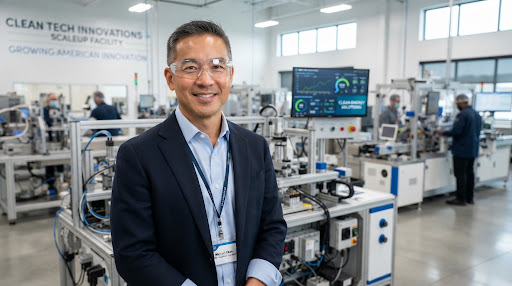
Running three shifts means the lines operate around the clock, with crews rotating through the day, evening and overnight. That matters because battery manufacturing is capital intensive. A line that sits idle is expensive, so plants try to keep equipment working as many hours as possible once the process is stable.
Getting to three shifts is usually the hard part. New cell lines go through a ramp period in which yields are low, scrap rates are high, and engineers tune every step from electrode coating to cell sealing. Operators in this scenario say they cleared that ramp faster than planned, though they have not shared yield data that would allow outsiders to judge.
Who is being hired
The 14,000 figure covers a mix of roles, and the coalition describes it as including direct plant jobs along with some construction and supplier positions. Readers should keep that breakdown in mind, because a headline job number can blend permanent factory work with temporary building trades.
- Line operators and technicians who run coating, stacking, winding and formation equipment.
- Maintenance and controls specialists who keep automated lines working.
- Quality and lab staff who test materials and finished cells.
- Logistics and safety roles that move heavy, sensitive materials through dry rooms and across the site.
Wages vary by role and employer, and the operators have not published a pay scale. What they do emphasize is that many positions do not require a four-year degree, but they do require technical training and comfort with controlled environments such as dry rooms, where humidity is kept extremely low.
Training pipelines and community colleges
Much of the hiring story runs through partnerships with community colleges. Plants in this scenario describe short certificate programs in mechatronics, industrial maintenance and battery manufacturing fundamentals, designed with input from plant managers so graduates can step onto a line with relevant skills.
“We stopped asking for years of battery experience, because nobody has it. We hire people who can learn a process and follow it precisely, then train them on ours.” — a plant manager at one of the facilities
The approach reflects a practical reality. Domestic cell manufacturing at this scale is young, so there is no large pool of seasoned workers to draw from. Employers are building the pool themselves, often by retraining people from automotive supply, appliance and metalworking jobs whose skills transfer well.
The supply chain behind the line
A cell plant is only as strong as its inputs. Anode and cathode materials, separators, electrolytes and copper and aluminum foils all have to arrive on time and meet tight specifications. Operators say they are working to bring more of that chain closer to home, which could create additional jobs among suppliers in the same region.
That ambition runs into hard limits. Some specialized materials are still produced mainly overseas, and building domestic capacity takes years. The coalition has not detailed how much of the material flowing into these plants is currently sourced in the United States.
What is not yet verified
The most important caveat is that the 14,000 jobs figure is self-reported. It has not been checked against payroll records or independent employment data, and it is not clear how the coalition counts part-time, contract or indirect positions. Different counting methods can produce very different totals.
Policy risk is the second caveat. The operators credit federal clean-manufacturing tax credits for helping their economics. Those incentives are set by law and can be changed, narrowed or repealed, and plants planned around them would be exposed if the rules shifted. Demand is a third unknown: battery plants depend on customers, especially vehicle makers and energy storage developers, whose own volumes can rise or fall.
What to watch next
Several signals will show whether the hiring is durable.
- Whether job counts are confirmed by state labor data or other independent sources.
- Whether plants share yield and output figures as they scale.
- How many graduates of the community college programs are still employed after a year.
- Whether more suppliers locate near the plants, deepening the regional chain.
If the pattern holds, the story would be less about any single factory and more about a region rebuilding its industrial skill base around a new product. If it does not, the lesson will be that manufacturing jobs follow demand and policy as much as they follow ambition. For now, the figures are encouraging, unaudited, and best read with that in mind.
infoLaunch edition: this story is an illustrative scenario. Figures are attributed to the sources named in the text and have not been independently verified. Nothing here is investment, legal or financial advice. See our Editorial Standards and Corrections Policy.
Written by
David Vance
Energy & Manufacturing Reporter. Newsroom staff in the launch edition are illustrative personas. About us • Report an error