Seed-to-Series B Funding in Autonomous Agriculture Jumps 42%
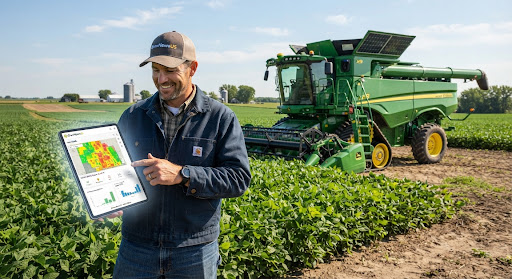
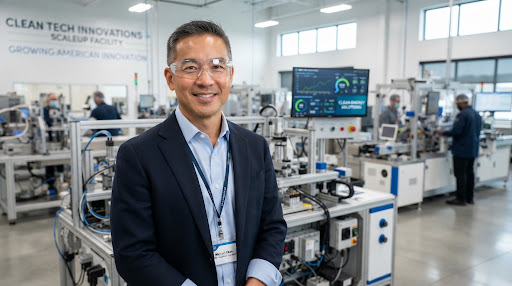
In this illustrative scenario, a regional deal tracker reports a 42% jump in seed-to-Series B funding for autonomous agriculture, roughly $860 million flowing to weeding implements and harvesters.
Key takeaways
- check_circleA regional deal tracker reports funding up 42%, with roughly $860 million going to autonomous farm hardware.
- check_circleFunded companies include vision weeders, robotic harvesters and retrofit autonomy kits for existing equipment.
- check_circleLong sales cycles, thin farm margins and repair logistics remain the central risks.
In this illustrative launch-edition report, we explore a shift in where heartland investors are placing their bets. The figures come from a regional deal tracker and are described here as reported; this article explains the trend and does not offer investment advice.
According to the tracker, funding across the seed-to-Series B stages in autonomous agriculture rose 42 percent, with roughly $860 million flowing into computer-vision weeding implements and robotic harvesters. Venture firms based in places like Omaha and elsewhere in the Plains and Corn Belt are, in the tracker's account, bypassing the coastal software plays that once dominated startup funding and backing machines that work in fields instead.
Reading the numbers carefully
Seed through Series B covers the early life of a company: the first money to build a prototype, then the rounds that fund pilot customers and early production. A 42 percent increase says more capital is arriving at those stages. It does not say how many companies are being funded, how large the average check is, or whether a handful of big rounds drive the total.
Deal trackers also differ in what they count and when they record it. The tracker in this scenario has not published its full method, so the figures are best treated as a directional signal rather than a precise measurement.
What kinds of companies are getting funded
The money is not going to a single technology. Investors and founders describe three broad groups.
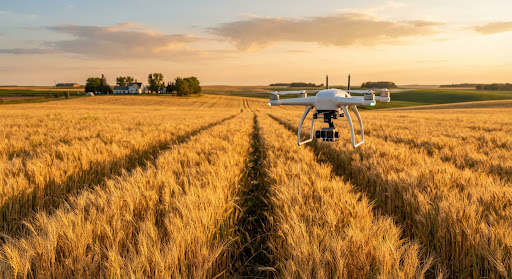
- Vision-guided weeding implements. Cameras and onboard computing identify weeds in real time, and a nozzle, laser or mechanical tool treats only the plant that needs it, which can reduce herbicide volumes.
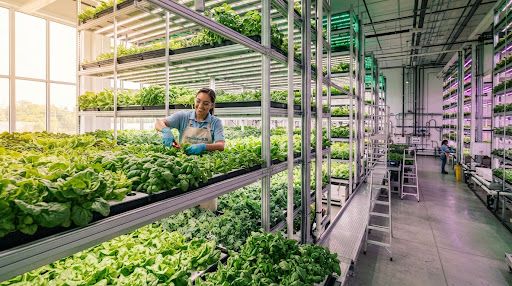
- Robotic harvesters. Machines that pick delicate crops where labor is scarce or seasonal, from fruit to vegetables.
- Retrofit autonomy kits. Hardware and software packages that add steering, sensing and path planning to tractors a farmer already owns, rather than requiring a new machine.
The third group deserves attention. Farm equipment is expensive and long-lived, so replacing a fleet is rarely realistic. A kit that upgrades an existing tractor meets farmers where they are, and it lowers the capital hurdle for adoption.
Why investors like hardware now
For years, venture money favored software because it scales cheaply and needs little physical infrastructure. Several things have changed. Cameras, processors and sensors have become cheaper and more capable. Labor shortages in agriculture are well documented, and input costs such as chemicals and fuel create a direct incentive to apply less and drive fewer passes.
“A weeding rig that cuts herbicide passes has a dollar figure attached on day one. We could never say that about our old software pitch.” — a partner at a heartland venture firm
That clarity of return is central. Hardware that solves a measurable cost problem is easier to evaluate than a platform that promises insight. Investors in this scenario also say that being close to customers helps, since farm trials are easier to run when you can drive to the field.
The risks that come with the territory
Autonomous agriculture is hard, and the same features that make it attractive make it risky.
Sales cycles are long. Farmers buy on seasonal rhythms, so a company that misses a planting window may wait a year for its next test. Farm margins are thin and volatile, which makes customers cautious about new spending, particularly when commodity prices fall. A promising machine can also struggle in the field: dust, mud, uneven terrain and changing light challenge computer vision in ways a lab does not.
Repair and service may be the most underestimated issue. A tractor that breaks during harvest cannot wait a week for a technician. Startups need parts, trained service staff and clear support commitments across wide, rural territories, which is costly to build. Companies that sell hardware also carry inventory and manufacturing risk that pure software firms avoid.
What is not yet known
The tracker's numbers have not been independently verified, and the article cannot say how many of the funded companies have paying customers at scale. It is also unclear how much of the increase reflects new money versus larger follow-on rounds into existing companies. Performance claims made by startups, such as herbicide savings or harvest speed, are typically company-reported and rarely tested across many farms and seasons.
Nor is it clear how durable the trend is. Funding flows can reverse quickly if interest rates, commodity prices or investor sentiment change, and early enthusiasm in a sector has often outrun results.
What to watch next
A few markers will show whether the money is turning into real adoption.
- Whether funded companies report repeat purchases from the same farms, not just pilots.
- Whether service networks and parts supply keep up with machine deployments.
- How companies perform across multiple crops and regions, not one favorable season.
- Whether later-stage rounds follow the early ones, or the pipeline stalls after Series B.
If the funding translates into machines that earn their keep, the heartland may end up exporting a new kind of agricultural technology. If it does not, the lesson will be familiar: farms reward tools that work reliably and pay back quickly, and capital alone cannot shorten a growing season.
infoLaunch edition: this story is an illustrative scenario. Figures are attributed to the sources named in the text and have not been independently verified. Nothing here is investment, legal or financial advice. See our Editorial Standards and Corrections Policy.
Written by
Elena Rostova
Venture & Scaleups Reporter. Newsroom staff in the launch edition are illustrative personas. About us • Report an error