Continuous Soil Chemistry Probes Prevent Salinity Spikes in California Aquifers
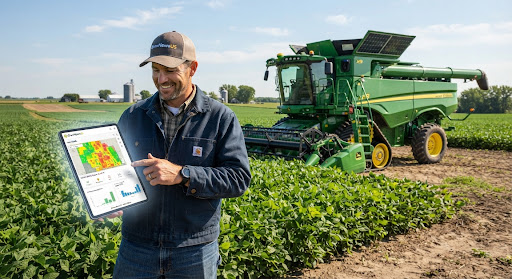
In-ground sensors that stream salinity and moisture readings every few minutes are helping Central Valley growers time irrigation before salts build up, an illustrative pilot suggests.
Key takeaways
- check_circleProbes stream salinity and moisture data every few minutes so growers can time leaching irrigation.
- check_circleSalt buildup threatens crop yields and groundwater in irrigated regions facing overdraft.
- check_circleCalibration, cost and data ownership remain open questions in the pilot.
In this illustrative launch-edition report, a pilot across Central Valley fields tests whether continuous in-ground chemistry probes can help growers catch salinity problems before they damage crops or reach groundwater. The pilot uses sensors that report every few minutes, paired with software that forecasts when fields need extra water to flush salts. The scenario is a composite; it does not describe a verified commercial deployment or published results.
The slow problem under irrigated fields
All irrigation water carries dissolved salts, even good water. When a crop takes up water and the sun evaporates the rest, the salts stay behind in the root zone. Over seasons they accumulate, and soil with too much salt makes it harder for roots to draw water, stunting growth and reducing yields. Sensitive crops show stress at relatively low levels.
The standard remedy is leaching: applying more water than the crop needs so the extra pushes salts below the roots. It works, but it uses water and can carry salts and nutrients deeper toward aquifers. In a region where water is scarce and regulated, growers face a real trade-off between protecting the soil and conserving the resource.
Overdraft raises the stakes
Much of the Central Valley relies on groundwater, especially in dry years when surface supplies shrink. Pumping more than nature recharges, called overdraft, lowers water tables and can degrade quality, because deeper or more heavily used aquifers may carry higher concentrations of salts. State groundwater sustainability rules push local agencies to bring basins into balance, which makes every acre-foot matter.
A water manager involved in the pilot framed it this way:
“We used to schedule leaching on the calendar or on a hunch. When water costs what it does and the basin is under pressure, a hunch is an expensive way to farm.” — a water manager with a participating grower group
How the probes work
The core sensor measures electrical conductivity, usually written EC. Dissolved salts conduct electricity, so a probe placed at root depth can estimate how salty the soil water is. Paired moisture sensors indicate how much water is present, which matters because the same amount of salt reads differently in wet and dry soil. Many setups add temperature, since conductivity shifts with it.
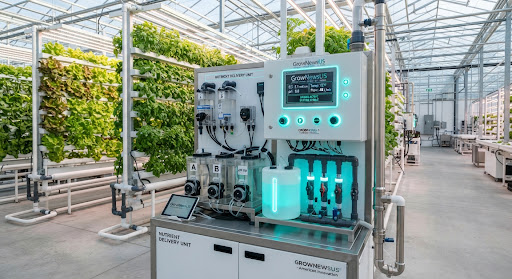
In the pilot, probes sit at several depths in each monitored block and transmit readings through a low-power radio network to a cloud dashboard. Instead of a grower sampling soil by hand a few times per season, the data arrive continuously, showing trends as they develop.
Where AI comes in
Raw readings are only useful if someone interprets them. The pilot software combines probe data with weather, crop stage, irrigation records and soil type to forecast how salinity will move in the coming days. A model can estimate when the root zone will approach a threshold for the crop and recommend a leaching event of a certain size, ideally timed with an irrigation already scheduled.
The aim is precision rather than excess. Practical benefits that participants describe include:
- Earlier warning: catching a rising trend before visible crop stress appears.
- Targeted leaching: applying extra water only where and when it is needed.
- Better records: documented data that can support reporting to water agencies.
Participants characterize the early outcomes modestly: growers report that the data changed some irrigation timing decisions and helped them spot problem zones within fields. No yield or water-savings figures have been independently verified, and none are claimed here.
What is not yet known
Several practical issues temper the optimism. Calibration is the first. Conductivity probes can drift, and readings depend on soil texture, so sensors need field checks against lab samples to stay trustworthy. A confident-looking dashboard built on bad readings could mislead a grower.
Cost is the second. Sensor networks require hardware, installation, connectivity and subscription fees, and the return depends on crop value and acreage. High-value specialty crops may justify it sooner than lower-margin commodities. Smaller farms may find the upfront outlay hard.
Data ownership is the third. Who owns the streams from a grower’s field, who can see them, and whether they might be shared with regulators, lenders or buyers are questions that should be settled in writing before installation. Growers have reason to ask whether their data could one day be used in ways they did not expect.
Finally, forecasting models are only as good as the data and assumptions behind them. Unusual weather, changes in water quality or unexpected crop behavior can degrade predictions, and a human still needs to judge.
What to watch next
The next step for any such pilot is a controlled comparison: fields managed with sensor guidance against similar fields using standard schedules, over several seasons, with methods open to outside review. Look also for third-party validation of sensor accuracy and clear data-use terms. If those pieces fall into place, continuous chemistry monitoring could become a standard part of irrigation management in water-stressed regions. If not, it will remain an interesting tool whose value depends heavily on the farm and the setup.
infoLaunch edition: this story is an illustrative scenario. Figures are attributed to the sources named in the text and have not been independently verified. Nothing here is investment, legal or financial advice. See our Editorial Standards and Corrections Policy.
Written by
Priya Nandakumar
Data & Sensors Reporter. Newsroom staff in the launch edition are illustrative personas. About us • Report an error