Geothermal Micro-Plants Prove Viable Base Load for Texas High-Density AI Data Hubs
A developer reports that small modular geothermal units beside a Texas data campus are delivering steady power in a pilot, pointing to an alternative to gas turbines for dense AI workloads.
Key takeaways
- check_circleA developer reports that modular binary-cycle geothermal units delivered steady power beside a data campus in a pilot.
- check_circleCo-location can cut transmission needs and match the constant load of AI computing.
- check_circleResults are developer-reported; cooling water, site geology and scaling costs remain unproven.
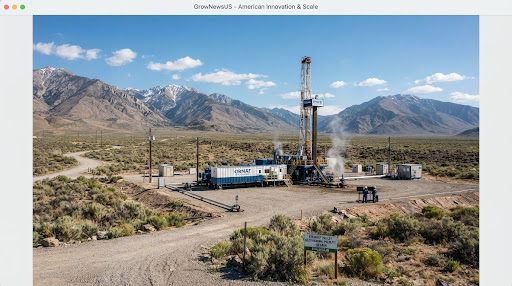
In this illustrative launch-edition analysis, a developer in the San Antonio area reports that small modular geothermal units, sited right beside a data campus, have delivered steady electricity during a pilot. If the results hold, the developer argues, such micro-plants could offer an alternative to gas turbines for the dense, always-on power demands of AI workloads. All pilot figures here are developer-reported and unverified by an outside party.
What a modular geothermal unit is
Most conventional geothermal plants are large, custom-built facilities tied to exceptional resources. The units in this scenario are smaller and standardized. They use a binary-cycle design: hot water from underground passes through a heat exchanger, where it warms a second fluid with a lower boiling point. That second fluid vaporizes, spins a turbine and is then cooled and condensed to start again. The geothermal water itself never touches the turbine and is typically injected back underground.
Binary cycle suits moderate temperatures, which broadens the places where geothermal might work. Because the equipment is built in modules, a developer can ship skid-mounted units to site and add more as demand grows, rather than commit to one large plant.
Why sit beside the data campus
AI computing campuses draw large, steady loads. Their operators care about reliability, speed to power and, increasingly, emissions. Co-location, meaning generating power next to where it will be used, has several attractions:
- It reduces dependence on long transmission lines and the interconnection queues that can delay projects for years.
- It matches a flat generation profile, which geothermal naturally provides, to a flat load.
- It keeps energy losses in transmission low.
- It gives the campus a degree of resilience if the wider grid is stressed.
The developer says the pilot units ran at a steady output through the test period, without the daily swings that solar and wind show. It describes the performance as consistent with design expectations but has not published detailed capacity-factor data.
The appeal is boring in the best way. The output line is flat, and a flat line is what a data hall wants. — an operations engineer on the pilot
Compared with gas turbines
Gas turbines are the incumbent answer for fast, firm power on site, and they can often be delivered and permitted quickly. Their drawbacks are exposure to fuel prices, combustion emissions and, for some buyers, the difficulty of meeting clean-power commitments. Geothermal has no fuel cost once wells are drilled and no combustion emissions, but its costs are front-loaded into drilling and exploration, and the resource must be proven before a plant can be sized.
That trade is why the modular approach is interesting. By starting small, a developer can prove a site, generate revenue from the first unit and expand if the reservoir performs. It also spreads risk. A single dry or underperforming well is a smaller setback for a modest unit than for a hundred-megawatt plant.
Cooling and water
Data centers need to reject heat, and so do geothermal plants. Binary units can use air-cooled condensers, which avoid large water withdrawals but lose efficiency on hot days, a real consideration in Texas summers. Water-cooled condensers perform better but consume water. The developer says the pilot used a hybrid approach, but the exact water volumes have not been disclosed.
There is an interesting synergy to explore. The campus itself produces waste heat, and in principle some of it could preheat fluids or support other uses, though integrating two very different systems adds engineering complexity. No one should assume the pairing is free of trade-offs.
Limits and open questions
Readers should treat this as an early, narrow data point. A pilot is not a commercial fleet, and several things remain unproven:
- Resource depth. Whether suitable heat exists at accessible depth near enough to major data hubs, across more than one site.
- Long-term reservoir behavior. How output changes after years of operation, including thermal decline.
- Cost at scale. Drilling and equipment costs for many units have not been independently benchmarked against alternatives.
- Verification. The pilot results come from the developer, and no third-party engineer has published an assessment.
Environmental review, land access and local permitting will also shape how fast any of this can move.
What to watch next
Watch for independent verification of pilot output and availability. Watch for disclosure of power purchase terms, which would show whether geothermal is competitive on price and not only on emissions. Watch whether a second and third site replicate the first result, since repeatability is the real proof of a modular concept. And watch how gas-turbine developers respond, because the contest for AI power is likely to be won by whoever can deliver reliable megawatts soonest.
If micro-plants do prove out, they could become one more tool for a grid straining to serve a new kind of load: not a replacement for everything else, but a quiet, steady contributor next to the servers.
infoLaunch edition: this story is an illustrative scenario. Figures are attributed to the sources named in the text and have not been independently verified. Nothing here is investment, legal or financial advice. See our Editorial Standards and Corrections Policy.
Written by
Rachel Diaz
Western Energy Reporter. Newsroom staff in the launch edition are illustrative personas. About us • Report an error