FurrowWorks Robotics Weighs a Public Listing After a $420M Autonomous Tractor Order
In this illustrative launch-edition report, a fictional Iowa autonomy company says a $420M order from farm cooperatives has it exploring a stock-market listing, though no filing has been made.
Key takeaways
- check_circleCompany-reported: a $420M multi-year order from a group of farm cooperatives for retrofit autonomy kits.
- check_circleThe fictional company is exploring a listing but says no filing has been made.
- check_circleA public offering is a multi-step process, and nothing here is investment advice.
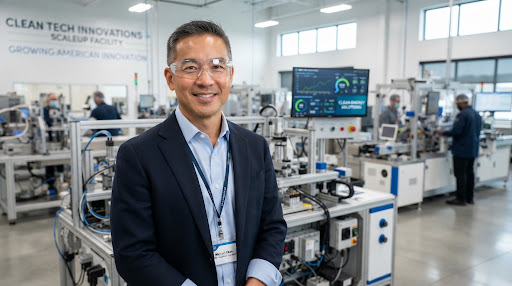
In this illustrative launch-edition report, we look at FurrowWorks Robotics, a fictional Des Moines, Iowa company that makes autonomy systems for farm tractors. The company, its customers and its figures are invented to explore a real pattern: what happens when a young hardware business lands a very large order and begins to think about the public markets. The $420 million figure is described as company-reported within the scenario. This article explains; it does not advise.
According to the company, a group of farm cooperatives has placed a multi-year order worth $420 million. Executives say the size of that commitment has led them to explore a stock-market listing. They also say plainly that no filing has been made and no decision is final.
What retrofit autonomy means
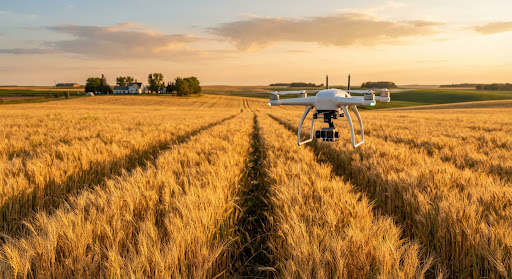
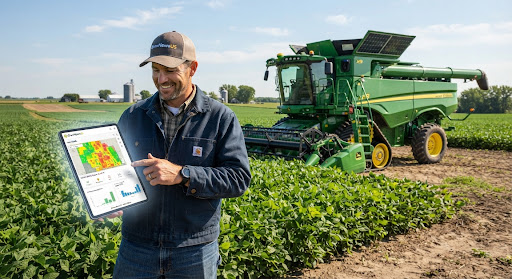
Most farms already own tractors that cost a great deal and last for decades. Replacing a fleet with new driverless machines would be prohibitively expensive for many operators. Retrofit autonomy takes a different path: a kit of sensors, computers and actuators is installed on an existing tractor so that it can steer, follow a planned route and control an implement with limited human supervision.
Typical components include satellite positioning receivers, cameras, radar or lidar to detect obstacles, a computer to run perception software, and hardware that interfaces with the tractor’s steering and hydraulics. A farmer or technician sets field boundaries and tasks, and the machine does the repetitive passes for tillage, planting or spraying.
The appeal is easy to see. Field work is concentrated into narrow windows, and labor is hard to find at those moments. A tractor that can keep running through a long day, or run at night, could help a farm cover more ground in good conditions.
“Our members do not need a new tractor. They need another set of hands at planting.” — a purchasing manager at one of the cooperatives
What a $420M multi-year order means
An order of this kind is not the same as revenue in the bank. It is a commitment to buy over time, and its value depends on the contract terms. Several questions matter:
- Firm or flexible? Some orders can be reduced or canceled if conditions change.
- Delivery schedule. Revenue is typically recognized as kits are delivered and installed.
- Service and software. Recurring fees for maintenance and updates can matter as much as hardware.
- Customer concentration. A few large buyers can make a company look strong while leaving it exposed.
For a startup, such an order is also a manufacturing challenge. Building, shipping and installing thousands of kits requires suppliers, trained installers and a support network in rural areas. Falling short can damage a reputation quickly.
How a listing generally works
An initial public offering, or IPO, is the process by which a private company first sells shares to the public. The path generally runs through several stages. The company chooses banks to guide the process and prepares audited financial statements. It then files a registration statement with federal securities regulators, commonly known as an S-1, which describes the business, its finances and its risks. Regulators review and comment, and the company may revise the document several times.
Once the filing is public, management typically goes on a roadshow, presenting to prospective institutional investors. The banks gather indications of interest, and the company sets a price and the number of shares shortly before trading begins. Companies pick a stock exchange to list on, but the venue is a late decision, and none has been selected here.
Many companies that explore a listing never complete one. Market conditions, financial results or a strategic partner can change the plan, and some firms prefer to stay private or raise funds in other ways.
Risks to understand
Autonomy for agriculture carries real risks, and any company in the field would have to describe them in a filing. Safety is first: machines operating near people, livestock and roads must detect obstacles reliably. Weather, dust and uneven terrain can confuse sensors. Seasonal demand can make results lumpy, and farm incomes depend on crop prices that move with markets.
There are also questions of competition, since established equipment makers and other startups are pursuing similar technology, and of regulation, as rules on automated machinery continue to develop. Interest rates and public-market appetite for growth companies can change quickly as well.
What is not yet known
The order value, the cooperatives’ identities and terms, the company’s profitability and the status of its deliveries have not been independently verified. We do not know whether the company will file, when, or on what terms. Readers should treat the exploration of a listing as a possibility, not a forecast.
What to watch next
If the company moves forward, watch for a public filing and what it reveals about revenue, margins, customer concentration and safety record. Watch also for evidence from the fields: how many tractors are retrofitted, how much supervision they need, and whether farmers renew service contracts. Those details will say more about the business than the headline order ever could.
infoLaunch edition: this story is an illustrative scenario. Figures are attributed to the sources named in the text and have not been independently verified. Nothing here is investment, legal or financial advice. See our Editorial Standards and Corrections Policy.
Written by
Elena Rostova
Venture & Scaleups Reporter. Newsroom staff in the launch edition are illustrative personas. About us • Report an error