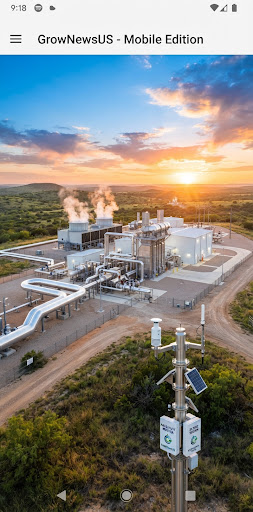
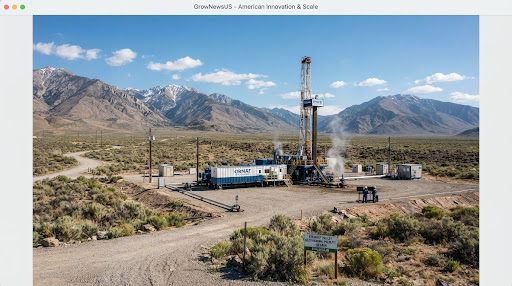
Iron-Flow Batteries Help a Texas Interconnect Outpace Coal for 90 Straight Days
An independent interconnect operator in Texas reports that iron-flow batteries kept summer peaks covered for 90 straight days while narrowing wholesale price spreads, in an illustrative launch-edition scenario.
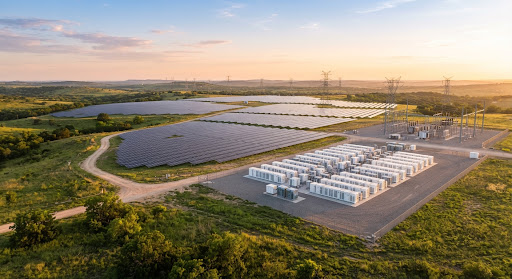
Key takeaways
- check_circleAn unnamed Texas operator reports iron-flow batteries covered summer peaks for 90 straight days without leaning on coal.
- check_circleThe operator says wholesale price spreads narrowed by roughly 31 percent; the figure is self-reported.
- check_circleOne summer of data cannot show how the system performs in a harsher or calmer season.
In this illustrative launch-edition report, an independent interconnect operator somewhere in Texas describes a summer in which its fleet of iron-flow grid batteries helped carry peak demand for 90 consecutive days. The operator, which we are not naming, says solar and wind output, shifted into the evening by storage, did the work that coal units once did. It also reports that wholesale price spreads narrowed by roughly 31 percent over the same period. Both figures are company-reported and have not been independently audited.
What an iron-flow battery actually is
Most people picture lithium-ion when they hear grid battery. Iron-flow systems work differently. They store energy in liquid electrolyte, built largely from iron, salt and water, held in large tanks. When the grid needs power, the electrolyte is pumped across a cell stack where a chemical reaction releases electrons. To recharge, the process runs in reverse.
That design has trade-offs worth understanding:
- Duration. Because capacity lives in the tanks, adding hours of storage mostly means adding more electrolyte, not more expensive cell stacks.
- Materials. Iron and salt are abundant and domestically available, which can ease supply-chain worries that surround some lithium-ion inputs.
- Safety profile. The water-based electrolyte is generally not flammable, which simplifies siting near load.
- Efficiency. Round-trip efficiency is typically lower than lithium-ion, so some energy is lost in each cycle.
- Footprint. The systems are bulkier per unit of power, which matters where land is tight.
Lithium-ion remains the workhorse for short bursts of power, usually up to a few hours. Iron-flow is aimed at the longer stretch, when the sun has set but the air conditioners are still running.
Why storage lets solar and wind beat coal at the peak
Texas has long had abundant wind and a fast-growing solar fleet. The difficulty has never been generating electricity at midday. It has been the early evening, when solar fades, demand stays high and the grid historically leaned on thermal plants to fill the gap.
Storage changes that arithmetic. A battery charges when renewable output is plentiful and cheap, then discharges into the evening ramp. Every hour that stored energy covers is an hour a coal or gas unit does not need to run at the margin. The operator says its dispatch records show the batteries covering the steepest part of the evening climb on each of the 90 days, which is what it means by outpacing coal.
The batteries did not replace every thermal unit on the system. They took the expensive, awkward hours off the table. — a control-room supervisor at the operator
Narrower spreads, explained
Wholesale electricity prices swing sharply between cheap midday hours and scarce evening hours. The gap between them is the spread, and it is the revenue pool that arbitrage-driven storage chases. The operator reports that spreads narrowed by about 31 percent as the batteries bought low and sold high.
That is a feature, not a flaw. When storage competes away the extreme price spikes, buyers face fewer shocks. Commercial customers on wholesale-indexed contracts, the operator says, saw steadier monthly bills. The flip side is also plain: as more storage arrives, the arbitrage opportunity shrinks, so the business case for the next battery depends on other services, such as reserves and frequency response, not on spreads alone.
Why deployment speed matters
Part of the story is how quickly the units went in. Modular tank-and-stack designs can be assembled in standard blocks, and the operator says its sites moved from groundbreaking to energization faster than a conventional thermal plant would. Faster interconnection also means faster learning. Each site fed operating data back into the next, a pattern common to young industrial technologies.
Local workforce effects are part of this too. Installation draws on electricians, pipefitters and controls technicians, many of whom already work in Gulf Coast industrial trades. In an illustrative sense, storage is one more place where existing skills transfer rather than disappear.
What we do not know
The honest limits here are significant. First, this is a single summer. Weather was a major variable: a milder season than a record-hot one would make 90 straight days easier to achieve, and the operator has not shown how the system would behave under a prolonged heat dome combined with low wind. Second, the headline figures are self-reported. No independent party has audited the dispatch logs or the spread calculation, and a different method of measuring spreads could produce a different percentage.
Third, it is unclear how much of the result is attributable to iron-flow chemistry specifically, as opposed to the operator's broader mix of resources, market conditions or fuel prices that season. Fourth, long-term durability of the electrolyte and cell stacks across thousands of cycles is still being established for this class of technology, and operating costs over a full asset life are not yet public.
What to watch next
Several markers will show whether this is a durable shift or a good summer. Watch for independent verification of the dispatch data, ideally from a third-party engineer or market monitor. Watch whether the operator repeats the result through a winter weather event, which tests a very different failure mode. Watch how storage owners respond as spreads compress, since new revenue streams will determine whether more projects get built.
Finally, watch how long-duration chemistries compare on delivered cost per hour of storage once they reach commercial scale. If iron-flow holds up, it could give grid planners a domestically sourced option for the hours that matter most. If it does not, the 90-day streak will still stand as a useful data point about what storage can do when it is built fast and dispatched well.
infoLaunch edition: this story is an illustrative scenario. Figures are attributed to the sources named in the text and have not been independently verified. Nothing here is investment, legal or financial advice. See our Editorial Standards and Corrections Policy.
Written by
Arthur Sterling
Grid & Storage Reporter. Newsroom staff in the launch edition are illustrative personas. About us • Report an error