The Heartland Is Not Playing Catch-Up to Silicon Valley. It Is Building the Physical Reality They Forgot How to Construct.
A guest essay argues that US venture capital long favored bits over atoms, and that the heartland is now where scalable, physical enterprise is being rebuilt.

The argument in brief
- check_circleEnergy security and crop resilience have made physical production a strategic frontier again.
- check_circleCapital intensity, rural labor shortages and policy dependence are real risks, not footnotes.
- check_circleDurable clusters pair patient capital with training, shared infrastructure and customer partnerships.
In this illustrative launch-edition essay, I want to make an argument that sounds contrarian in a country that has spent a generation measuring ambition by app downloads: the American heartland is not chasing the coasts. It is doing the harder thing they set aside, which is building physical reality at scale. I write as an agricultural economist, and the views here are my own.
Bits had a long run, and atoms were left waiting
For roughly three decades, venture capital rewarded businesses that could grow without touching much steel, soil or concrete. The logic was sound on its own terms. Software has near-zero marginal cost, and a good product can reach millions of people before the first warehouse lease is signed. Capital followed that logic, and so did talent, mentorship and prestige.
The side effect was quiet neglect. Fewer investors learned how to underwrite a fertilizer plant, a grain-handling upgrade or a transformer factory. Fewer engineers chose careers that involved mud boots and hard hats. The institutional memory of how to design, finance and commission large physical systems thinned out, in part because the incentive to keep it alive had weakened.
Then the world pushed back. Supply chains proved fragile, energy security became a boardroom topic, and weather volatility turned crop resilience into a balance-sheet question.
Why the factory floor and the cornfield are now frontiers
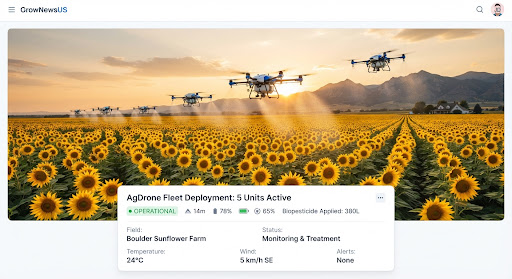
Consider what a modern farm has become. A large operation is a logistics business, a data business and a biological-process business at the same time. It makes decisions about inputs, timing and risk across thousands of acres, with weather as a counterparty that never negotiates. That is exactly the kind of problem that sensors, software and automation are suited to improve, but only if someone builds the machines, the connectivity and the trust in the field.
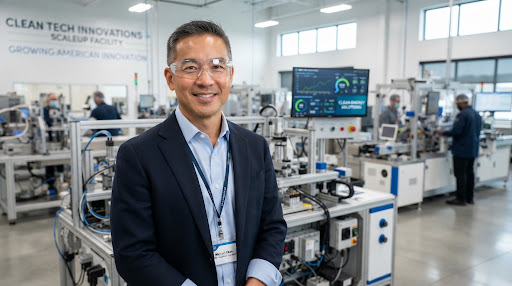
The same is true on the industrial side. Electrification asks for batteries, motors, switchgear and the factories that make them, run by skilled technicians. None of this can be shipped as a download, and the places with land, energy, water and workforce traditions are, more often than not, in the middle of the country.
That is the heart of my thesis. Proximity to the physical world is becoming a strategic asset again. A founder who can walk from the prototype bay to a working field trial in an afternoon learns faster than one who must schedule a site visit three time zones away. Learning speed is the real competitive advantage in hard technology, and the heartland offers it in a way that is difficult to replicate remotely.
The best feedback we ever got did not come from a pitch meeting. It came from a grower who told us, politely, that our sensor mount would not survive a wet harvest. — a founder at a heartland hardware startup
The counterarguments deserve a real hearing
The objections are serious. The first is capital intensity. Physical ventures need money before they need customers, and they often need it in large, lumpy amounts. A software company can iterate cheaply; a plant cannot. Builders in this space must survive long stretches between funding and first revenue, and not every investor has the patience or the technical judgment for that.
The second is rural labor. Many communities already struggle to find enough workers for existing jobs, and new facilities compete for the same people. Housing, childcare, broadband and training pipelines are real constraints, not footnotes. If a region announces a factory but cannot house and train the workforce, the announcement will outrun the reality.
The third is policy dependence. Much of the current momentum in energy, manufacturing and conservation is supported by public programs, incentives and procurement. Policy can change direction, and businesses that rely heavily on it carry a risk that purely market-driven firms do not. A wise operator treats public support as a bridge and not as a foundation.
I take all three seriously, and I think they sharpen the thesis instead of defeating it. They tell us that the heartland opportunity is not automatic. It will be won by places that pair capital with patience, jobs with housing, and ambition with an honest view of policy cycles.
What a durable heartland model looks like
If the argument holds, a few features should show up in the places that succeed. In general terms, I would look for the following.
- Patient, technically literate capital. Investors, lenders and cooperative institutions that understand equipment cycles, seasonality and permitting, and that structure financing to match them.
- Training tied to real employers. Community colleges and technical programs designed around the skills that nearby plants and farms say they need, with clear routes from classroom to paycheck.
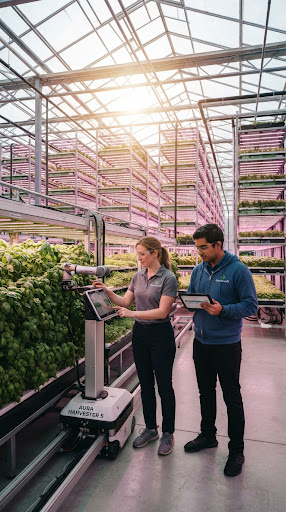
- Customers as co-developers. Growers, utilities and manufacturers who test early products on real sites and say plainly what works.
- Shared infrastructure. Reliable power, freight, broadband and water, treated as regional assets rather than company problems.
It is also worth being candid about what I cannot show. This essay offers an argument and a set of general observations, not a dataset. Whether the pattern I describe is spreading broadly or concentrated in a few standout communities is a question that careful, independent research still needs to answer. Readers should treat my thesis as a hypothesis worth testing, and should be skeptical of anyone, including me, who claims certainty about how a regional economy will evolve.
The takeaway
The heartland is not playing catch-up. It is working on a different problem, one that the software era under-invested in and the current moment has made urgent: how to make food, energy and industrial goods reliably, cleanly and at scale. The obstacles are real, including capital intensity, labor shortages and policy dependence, and honest builders will say so. But a country that wants resilience cannot get it from screens alone. It needs people willing to pour concrete, calibrate machines and plant, harvest and measure, and many of them already live in the places that some investors still call flyover.
infoLaunch edition: this essay is by a fictional contributor. Figures are attributed to the sources named in the text and have not been independently verified. Nothing here is investment, legal or financial advice. See our Editorial Standards and Corrections Policy.
Guest essay by
Dr. Evelyn Vance
Guest essayist (fictional launch-edition contributor). Newsroom staff in the launch edition are illustrative personas. About us • Report an error